





Water Heater Buying Guide: Is a Gas Geyser More Effective or an Electric Geyser? And What’s Right for You?
By fasihimran
November 24, 2025
Water Heater Buying Guide: Is a Gas Geyser More Effective or an Electric Geyser? And What’s Right for You?
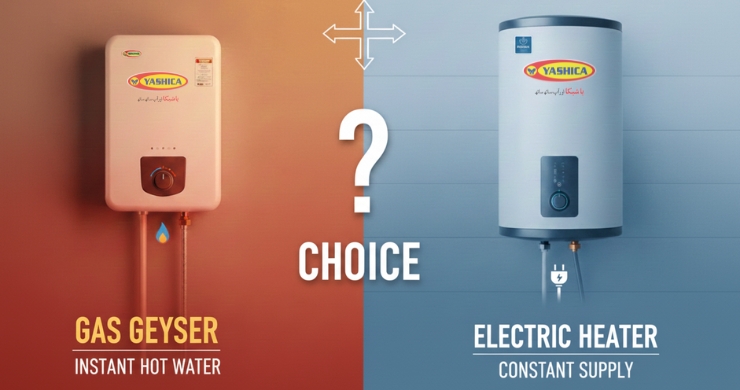
Choosing a water heater, or geyser, is a decision that impacts your household budget, safety, and daily comfort throughout the winter months. The main debate often centers on efficiency and running cost: Gas Geysers versus Electric Geysers. This comprehensive guide will analyze the effectiveness, safety features, installation requirements, and long-term costs of both types to help you select the ideal appliance for your home.Gas Geysers: Speed and Energy Efficiency
Gas geysers operate using Natural Gas (or sometimes LPG) to heat water, typically delivering hot water faster than electric models.Effectiveness and Mechanism
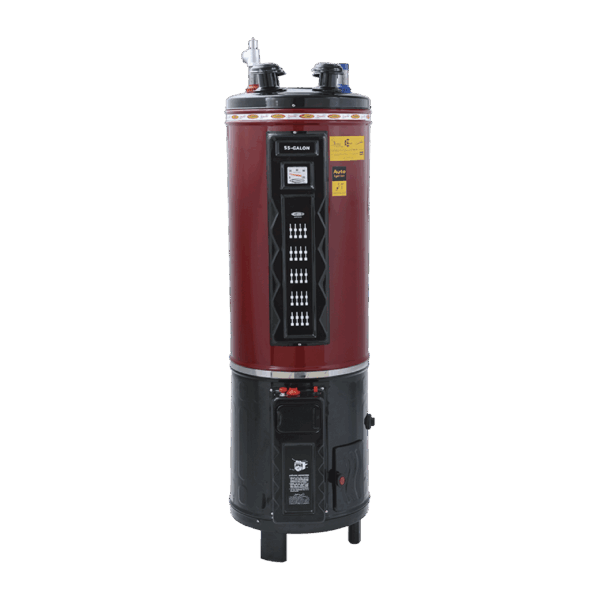
Gas heaters offer instantaneous heating, meaning they can quickly raise the water temperature. Tankless (instant) gas models are highly effective, providing an unlimited supply of hot water, whereas storage gas models heat a large tank rapidly.Advantages
- Operational Cost: Gas is often cheaper than electricity for heating large volumes of water, leading to lower monthly utility bills, especially for large families.
- Heating Speed: They heat water significantly faster than electric models, providing quick relief on cold mornings.
- High Efficiency: Modern gas geysers are highly energy-efficient, wasting less energy once the desired temperature is reached.
- No Power Dependence: They continue to operate even during short power outages (load shedding).
Disadvantages
- Safety Risk: Requires proper ventilation and regular maintenance due to the risk of carbon monoxide (CO) leakage, necessitating specialized exhaust/venting pipes.
- Installation Complexity: Installation is more complex as it requires a dedicated gas line and professional venting setup.
- Inconsistent Gas Supply: Operation is dependent on the consistent availability and pressure of the gas supply.

Electric Geysers: Safety and Simple Installation
Electric geysers operate by heating elements immersed in a storage tank. They are generally simpler to install and maintain.Effectiveness and Mechanism
Electric geysers are highly effective but their speed is limited by the power of the heating element and the capacity of the tank. Once the tank is heated, the water remains hot until used.Advantages
- Safety: They carry no risk of carbon monoxide emission and are generally considered safer than gas units.
- Simple Installation: They only require a standard electrical connection and plumbing, making installation easier and cheaper.
- Consistent Operation: Their performance is reliable, provided there is a stable supply of electricity.
- Tank Options: Available in various sizes (gallons/liters), allowing easy selection based on family size.
Disadvantages
- Heating Time: They take significantly longer to heat a full tank compared to gas geysers.
- Operational Cost (Electricity): In areas where electricity rates are high, running an electric geyser can result in higher monthly bills, especially if the unit is used frequently or lacks efficient insulation.
- Limited Supply: Storage models can run out of hot water, requiring a long wait for reheating.

Extra SEO Boost: Capacity and Inverter Technology
To ensure high ranking, highlight these key factors:- Capacity Selection: Do not choose a capacity based on price alone. For a family of 3-4, a 25-gallon (90-100 liter) storage unit is necessary for adequate hot water supply. Undersizing leads to frequent reheating and higher costs.
- Inverter Technology (Electric): Look for electric models featuring Inverter technology. While not common in storage geysers, some new models use smart heating elements to maintain temperature with less power consumption.
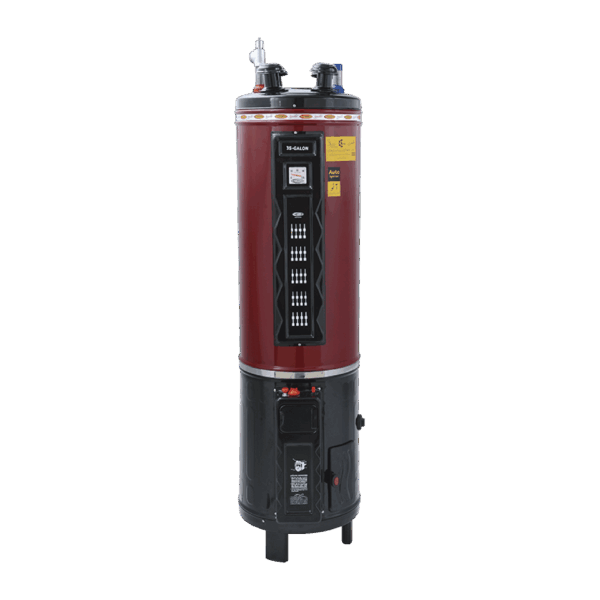
- Pressure Rating (ES-HP): For homes with high-pressure pumps or multi-story buildings, always choose a geyser with an ES-High Pressure (HP) rating to prevent tank damage. Yashica offers specialized ES-HP series water heaters for these situations.
The Final Verdict: Determining Your Best Match
| Decision Factor | Choose Gas Geyser If… | Choose Electric Geyser If… |
|---|---|---|
| Running Cost | You want the cheapest monthly utility bill for high water usage. | You prefer a simpler unit and use hot water sparingly (low volume). |
| Speed | You need instant or very fast reheating capabilities. | You can wait for the tank to heat up (e.g., overnight cycle). |
| Safety/Ventilation | You have a safe, properly ventilated outdoor installation spot. | You need a unit for a closed area (e.g., bathroom) where CO risk must be zero. |
| Installation | You have an accessible gas line and professional installation is arranged. | You need a quick and simple installation process. |
Final Thoughts
The right geyser is not about which is simply “more effective,” but which is more effective for your environment. If uninterrupted gas supply and low running costs are your priority, choose Gas. If simplicity and absolute safety are non-negotiable, choose Electric. Yashica offers certified and safe water heaters in both Gas and Electric variants, including specialized high-pressure models.To explore the full range of Yashica Water Heaters (Gas and Electric), click here: Explore Yashica Water Heaters