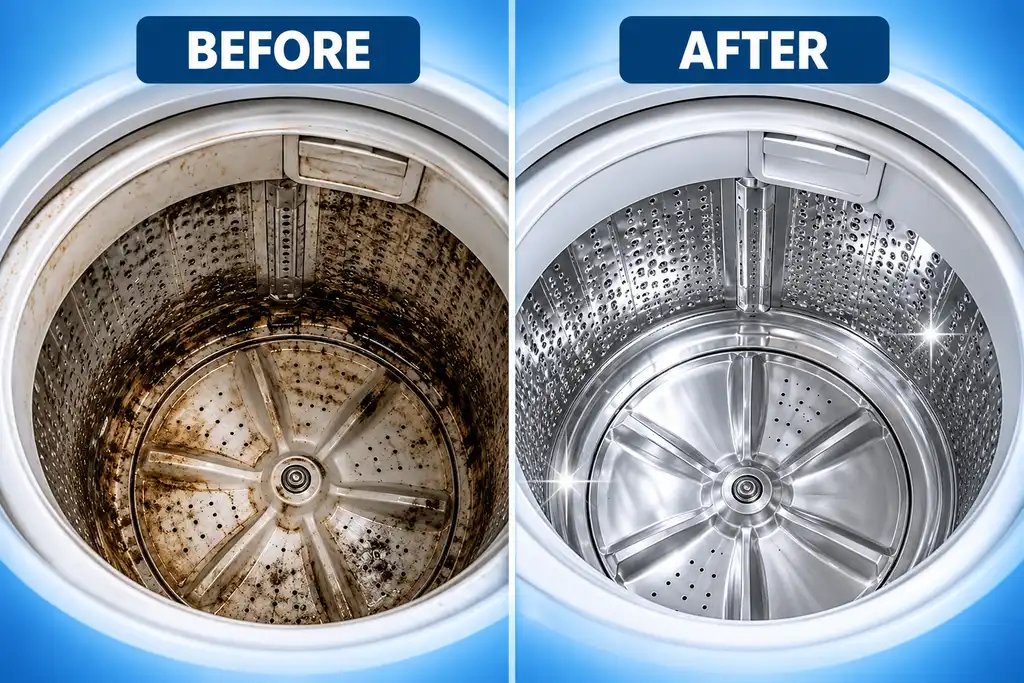
Regular cleaning washing machine interiors and accessible parts can help reduce detergent residue, trapped moisture, lint, and unpleasant odors.
For Pakistani households that use washing machines frequently for everyday clothes, uniforms, towels, and bedding, routine maintenance can also make it easier to notice leaks, buildup, or other problems before they become more serious.
The safest cleaning method depends on the exact machine. Always follow the manufacturer’s instructions and avoid using chemicals or cleaning cycles that are not approved for your model.
This guide explains how to clean a washing machine safely, which areas need attention, and when a maintenance issue should be handled by a technician.
Cleaning Washing Machine at Home: What Do You Need?
For basic washing machine maintenance, you may need:
- microfiber cloth
- soft sponge
- soft-bristled brush
- warm or room-temperature water
- mild soap where permitted
- approved washing-machine cleaner
- dry towel
- small container for residual water where needed
Do not automatically use bleach, vinegar, descalers, or other household chemicals.
Never mix chlorine bleach with vinegar, ammonia, acids, or other cleaners. Dangerous gases can be produced.
Step 1: Turn Off and Unplug the Washing Machine
Before cleaning accessible surfaces:
- Switch off the machine.
- Unplug it using dry hands.
- Make sure the cycle has completely stopped.
- Keep water away from the plug and controls.
Do not remove electrical covers or access internal wiring during routine cleaning.
If you notice a damaged power cord, burning smell, sparking, or repeated circuit-breaker trips, stop using the appliance and seek qualified service.
Step 2: Empty and Inspect the Washing Tub
Remove all laundry before cleaning.
Check the tub for items such as:
- coins
- buttons
- hair clips
- tissue
- loose threads
- small accessories
Remove only items that are safely accessible.
Then wipe visible tub and rim surfaces with a soft damp cloth where permitted.
Do not reach into inaccessible mechanical areas or dismantle the machine.
Step 3: Clean the Tub Using the Approved Method
The tub-cleaning method depends on the specific washing machine.
If the Machine Has a Tub-Clean Function
Follow the manufacturer’s instructions for:
- approved cleaning product
- required water level
- cycle selection
- cycle duration
Run the cleaning cycle without laundry if the manual instructs you to do so.
If There Is No Tub-Clean Function
Follow the manual’s approved empty-cycle or manual-cleaning method.
Do not assume every washing machine supports:
- hot-water cleaning
- bleach
- vinegar
- cleaning tablets
- automatic tub-clean cycles
For example, the Yashica YA-1000-WM lists a scrub board with double storm pulsator. That is a washing-system feature, not proof that the model has a dedicated tub-clean function.
Step 4: Clean the Detergent Area
Detergent and fabric-softener residue can build up where these products are added.
If your washing machine has a removable dispenser:
- remove it only if the manual allows
- rinse approved washable parts
- use a soft brush for accessible residue
- dry before reinstalling
If the machine does not have a removable drawer or dispenser, clean only the areas specified by the manufacturer.
Do not use sharp tools to scrape plastic components.
Step 5: Inspect Accessible Filters
Not every washing machine has the same filter arrangement.
Depending on the model, there may be:
- lint filters
- inlet screens
- drain filters
If the manual confirms a filter is user-removable:
- Remove it as instructed.
- Clear visible lint or debris.
- Rinse it if permitted.
- Dry or reinstall it according to instructions.
Do not open pump housings or disconnect internal drainage parts without model-specific guidance.
If drainage problems continue, see Common Washing Machine Problems & Prevention Tips.
Step 6: Wipe the Exterior, Lid and Controls
Use a soft, slightly damp cloth to clean accessible exterior surfaces.
Pay attention to:
- top panel
- outer cabinet
- lid or door
- handles
- accessible control surfaces
Do not spray liquid directly onto switches, buttons, or electrical controls.
For painted-metal cabinets, avoid abrasive brushes or harsh products that could damage the protective finish.
Dry exterior surfaces after cleaning.
Step 7: Check Visible Water Hoses
Inspect accessible hoses and fittings for:
- cracks
- kinks
- moisture
- loose-looking connections
- signs of leakage
Do not dismantle water valves or internal fittings yourself.
If you see persistent leakage, stop using the washing machine until the issue has been assessed.
Step 8: Let the Washing Machine Dry
Trapped moisture can contribute to unwanted odors.
After cleaning:
- remove standing moisture
- dry accessible surfaces
- allow the tub to ventilate where safe
- remove laundry promptly after normal washing
- keep the surrounding area reasonably ventilated
If children or pets are nearby, do not leave the machine open in a way that could create a safety risk.
How Often Should You Clean a Washing Machine?
There is no single cleaning schedule for every model.
A practical routine may look like this:
| Maintenance Task | Suggested Timing |
|---|---|
| Remove laundry promptly | After every wash |
| Wipe visible residue | As needed |
| Inspect detergent areas | Every few weeks |
| Run approved tub cleaning | Around monthly, if recommended |
| Clean accessible filters | According to the manual |
| Inspect hoses | Periodically |
Always follow the manufacturer’s schedule if it differs from general guidance.
Households that wash clothes frequently may need more regular maintenance than occasional users.
Common Washing Machine Cleaning Mistakes
Using Too Much Detergent
Extra detergent can create additional residue instead of improving washing results.
Follow suitable detergent dosage guidance.
Mixing Cleaning Chemicals
Never mix bleach with vinegar, ammonia, acids, or other cleaners.
Using Abrasive Tools
Hard brushes can damage plastic, painted metal, rubber, and seals.
Assuming Every Filter Is Removable
Only remove parts confirmed as user-serviceable.
Ignoring Moisture
Leaving wet clothes inside the machine or keeping the tub damp for long periods can contribute to odor.
Opening Internal Components
Routine cleaning washing machine surfaces should not involve motors, wiring, pumps, or electrical panels.
How Can You Prevent Washing Machine Odors?
Simple habits can reduce odor-causing buildup:
- remove laundry promptly
- use appropriate detergent quantities
- allow safe ventilation
- wipe visible residue
- clean approved filters
- avoid overloading
- follow the manufacturer’s maintenance schedule
Persistent smells after proper cleaning may indicate a drainage, buildup, or mechanical issue that needs further inspection.
Does Washing Machine Maintenance Affect Energy Use?
Routine maintenance helps keep accessible parts clean and the machine operating according to its intended setup, but it does not guarantee a specific percentage of electricity savings.
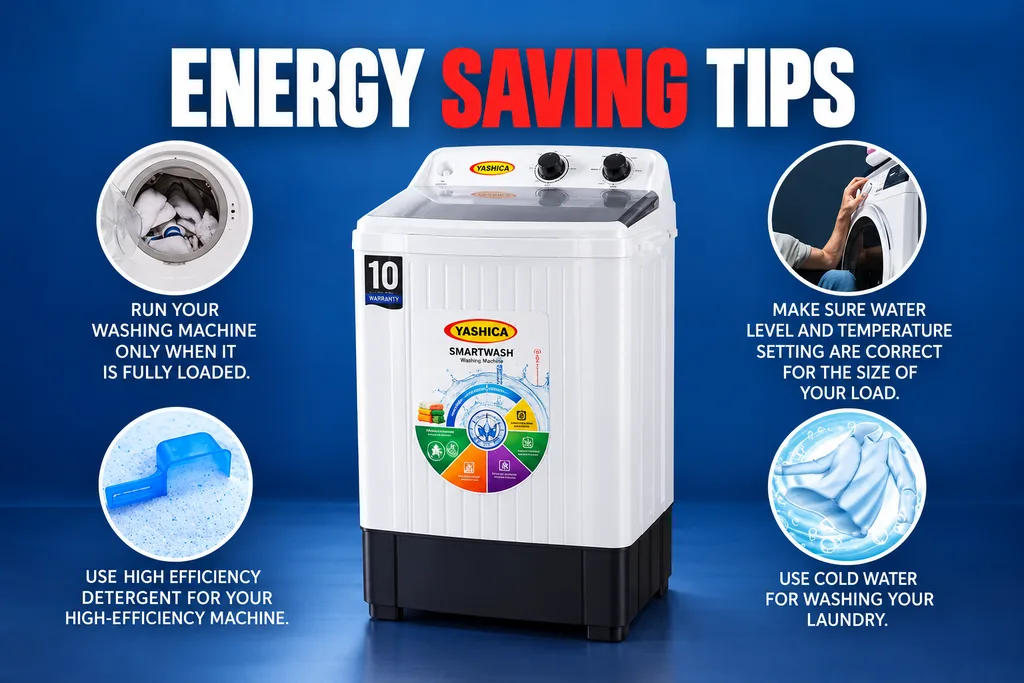
Good habits such as avoiding unnecessary repeat washes, loading the machine correctly, and using appropriate settings can also help reduce avoidable energy use.
For more information, read the Energy Efficient Washing Machine Guide.
When Should You Call a Technician?
Stop routine DIY maintenance and seek qualified help if you notice:
- persistent water leakage
- burning smell
- electrical sparking
- repeated breaker trips
- unusual grinding noises
- failure to drain after permitted checks
- repeated cycle failure
Do not repair internal wiring, motors, pumps, or electrical components unless you are properly trained.
Yashica customers can use the Yashica Contact Page for current support information.
Frequently Asked Questions
How do I clean a washing machine at home?
Unplug the appliance, empty the tub, wipe accessible surfaces, clean approved dispensers or filters, follow the manufacturer’s tub-cleaning instructions, and allow the machine to dry.
How often should I clean my washing machine?
Cleaning frequency depends on use and the manufacturer’s recommendations. Monthly tub maintenance can be a useful starting point where approved, while visible spills and residue should be cleaned as needed.
Can I use vinegar to clean a washing machine?
Only if the manufacturer explicitly allows it for that model and cleaning task. Never mix vinegar with chlorine bleach.
Why does my washing machine smell?
Possible causes include detergent residue, trapped moisture, lint, fabric-softener buildup, or inadequate ventilation.
Should I clean the washing machine filter?
Yes, if your model has a user-accessible filter and the manual provides a cleaning procedure.
How can I keep my washing machine cleaner for longer?
Use the correct detergent quantity, avoid overloading, remove clothes promptly, keep accessible areas dry, and follow the recommended maintenance schedule.
Maintain Your Washing Machine and Know When to Replace It
Routine cleaning can help keep a washing machine more hygienic and easier to use, but maintenance cannot correct every mechanical or electrical problem.
Follow the approved cleaning procedure for your specific model and avoid experimenting with harsh chemicals or internal repairs.
If your current machine is becoming unreliable or no longer suits your laundry needs, browse the Yashica Washing Machine Collection to compare current capacities and models.
For buyers considering replacement rather than maintenance, Buying Washing Machines in Pakistan explains what to compare before purchasing.
Editorial Verification: Recheck Yashica product specifications, category availability, support links, and maintenance guidance before publication. Cleaning methods should always follow the instructions for the specific washing-machine model.