Choosing built-in kitchen hobs for a modern Pakistani kitchen requires more planning than simply selecting the design you like.
Unlike a freestanding gas stove, a built-in hob is installed into a prepared countertop. That means burner layout, surface material, cutout dimensions, gas connection, ventilation and cabinet clearance all need to be checked before installation.
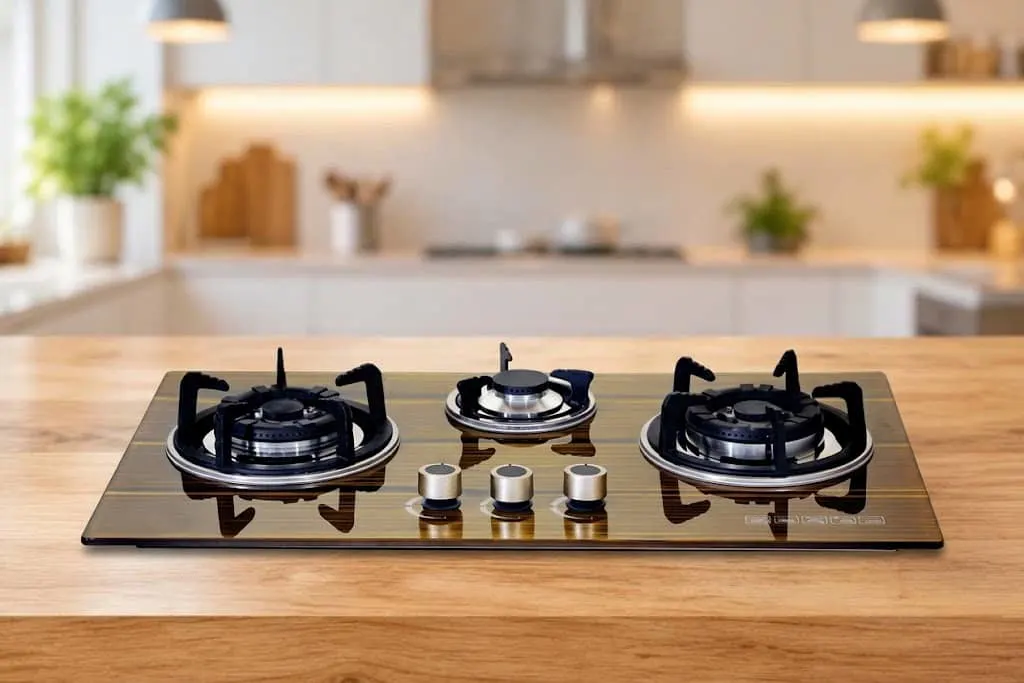
Yashica currently lists five built-in hob models: YA-186, YA-286, YA-386, YA-486 and YA-686. The reviewed models use three burners, cast-iron pan supports and 3V battery-operated auto ignition.
Built-In Kitchen Hobs: What Should You Compare?
Before buying, check:
- number of burners
- burner sizes
- burner material
- steel or tempered-glass top
- pan-support construction
- ignition system
- countertop cutout size
- overall hob dimensions
- gas compatibility
- cabinet clearance
- ventilation
- current price and stock
- warranty and service support
A built-in hob should fit both your cooking routine and the physical kitchen installation.
Yashica Built-In Hob Models Compared
| Model | Burners | Surface | Ignition |
|---|---|---|---|
| YA-186 | 2 large brass + 1 small | Heavy-gauge Grand steel | 3V battery auto ignition |
| YA-286 | 2 large brass + 1 small | Heavy-gauge double-shade steel | 3V battery auto ignition |
| YA-386 | 2 large brass + 1 small | Heavy-gauge Grand steel | 3V battery auto ignition |
| YA-486 | 2 large brass + 1 small | 8mm tempered glass | 3V battery auto ignition |
| YA-686 | 2 large brass + 1 small | Heavy-gauge Grand steel | 3V battery auto ignition |
All five current models are listed under Yashica’s Built-In-Hob category.
Why Choose a Built-In Hob?
A built-in hob can offer a cleaner integrated kitchen layout compared with a freestanding stove.
Potential benefits include:
- countertop-integrated appearance
- dedicated burner layout
- easier planning in fitted kitchens
- strong pan supports
- compact cooking surface
- separate choice of oven, if required
A built-in hob is especially useful where the kitchen design is planned around fixed cabinetry and countertops.
However, installation needs to be correct from the beginning.
Three-Burner Layout: Is It Enough?
All reviewed Yashica built-in hobs currently use:
- 2 large brass prime burners
- 1 small burner
A three-burner layout may suit households that normally cook:
- two main dishes together
- one smaller side dish
- tea or sauces alongside main cooking
The advantage is a compact layout without moving to a wider four- or five-burner setup.
The downside is that households regularly preparing several dishes at once may want more burner positions.
Yashica YA-486: Tempered Glass Option
The Yashica YA-486 Built-In Hob is the clearest design alternative in the current range.
Its published features include:
- 8mm thick tempered glass
- two large brass prime burners
- one small burner
- grey cast-iron pan trivets
- non-stick paint coating
- 3V battery-operated auto ignition
This model may appeal to buyers who prefer the visual appearance of a glass cooking surface.
However, tempered glass still needs appropriate care and should not be treated as impact-proof.
Steel-Top Built-In Hobs
Models such as YA-186, YA-386 and YA-686 use heavy-gauge Grand steel tops, while YA-286 uses a heavy-gauge double-shade steel top.
Steel-top models may appeal to buyers who prefer:
- a more traditional metal cooking surface
- a robust-looking finish
- easier visual coordination with stainless-steel kitchen appliances
The exact finish still varies by model, so compare the product itself rather than assuming all steel-top hobs look identical.
Glass Top vs Steel Top: Which Is Better?
Neither is automatically better.
Glass Top
Advantages may include:
- modern appearance
- smooth visual finish
- easy wipe-down surface when cooled
Considerations:
- avoid impact
- avoid sudden thermal shock
- follow approved cleaning instructions
Steel Top
Advantages may include:
- familiar kitchen finish
- durable-looking construction
- easier integration with metal-finish appliances
Considerations:
- keep dry
- avoid abrasive cleaning
- protect the finish
Choose according to kitchen design, cleaning preference and installation conditions.
Why Brass Burners Matter
Yashica’s reviewed built-in hobs list brass prime burners for the two larger burner positions.
Brass is commonly used in gas-burner construction because of its heat and corrosion-related properties.
However, burner material alone does not establish:
- gas efficiency
- flame output
- cooking speed
- lifespan
Also compare:
- burner size
- flame stability
- gas pressure compatibility
- cookware
- maintenance
Cast-Iron Pan Trivets
All reviewed models list grey cast-iron pan trivets with non-stick paint coating.
Pan supports matter because they need to hold cookware securely above the burner.
Before buying, consider your normal:
- pot diameter
- pan size
- cookware weight
- wok or karahi use
Stable cookware support is just as important as burner count.
What Does 3V Battery Auto Ignition Mean?
The reviewed Yashica hobs use 3V battery-operated auto ignition.
This means ignition does not rely on a permanent mains electrical connection for the spark system, according to the published specification.
Before purchase, verify:
- battery type
- battery location
- replacement method
- ignition behavior if the battery becomes weak
Do not assume a battery is permanently maintenance-free.
Installation Is the Most Important Buying Consideration
A built-in hob is different from a countertop stove because the worktop must be prepared for it.
Yashica’s own appliance guide specifically advises confirming:
- manufacturer-approved cutout
- cabinet clearance
- gas connections
- ventilation
before installation.
Do not cut a countertop using uncertain or poorly formatted online measurements.
Some live Yashica pages display dimensions with unclear symbols, such as:
- Case approximately W-28 × D-16
- Base approximately W-24 × D-13
The YA-386 page presents these more clearly as case W-28 × D-16 and base W-24 × D-13.
Because built-in installation is permanent, verify the exact dimensions directly before cutting stone, marble, granite or another countertop material.
Gas Compatibility Must Be Confirmed
A built-in gas hob should only be connected to the fuel type and pressure specified for the model.
Before installation, confirm:
- natural gas or LPG compatibility
- nozzle requirements
- regulator requirements
- gas inlet pressure
- hose or pipe requirements
Do not assume every gas hob can switch between natural gas and LPG without conversion.
If compatibility is not explicitly published, confirm it with Yashica or a qualified installer.
Ventilation Still Matters
Built-in installation does not remove the need for ventilation.
Gas combustion requires appropriate airflow.
A kitchen should have:
- suitable room ventilation
- unobstructed airflow
- safe positioning around cabinetry
- appropriate exhaust arrangements where required
If you notice:
- persistent yellow flame
- soot
- delayed ignition
- unusual gas smell
stop using the appliance until the issue is checked.
Never test for a gas leak with a flame.
Built-In Hob vs Gas Stove
Choose a built-in hob when:
- you want an integrated kitchen design
- the countertop can be professionally prepared
- fixed installation suits your kitchen
- separate oven placement is acceptable
Choose a freestanding gas stove when:
- portability is more important
- permanent countertop cutting is undesirable
- installation flexibility matters
- budget is focused on basic burner cooking
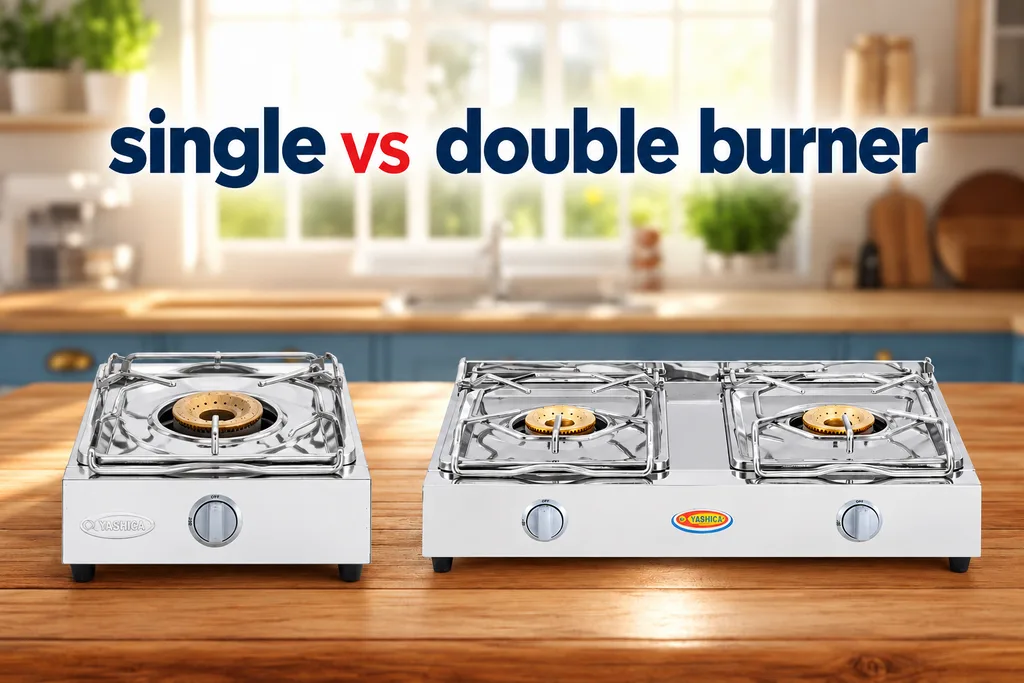
Yashica offers both options in its gas-appliance range.
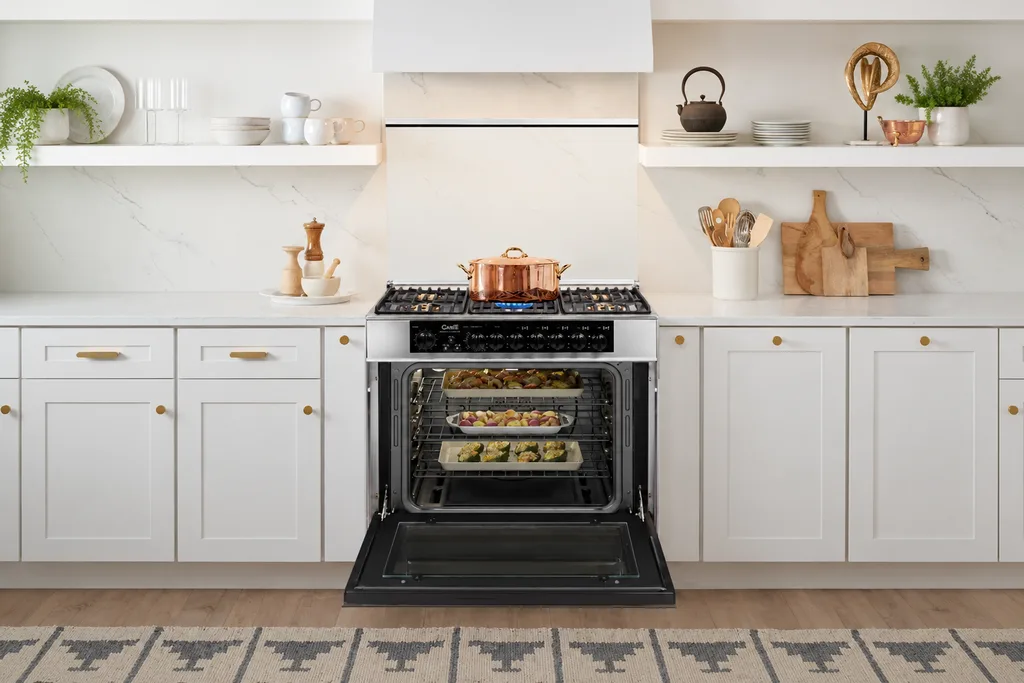
Built-In Hob vs Cooking Range
A built-in hob mainly provides the burner cooking surface.
A cooking range typically combines burners with a larger cabinet and model-dependent oven functions.
Choose a hob when:
- you prefer modular kitchen planning
- oven and burner placement should be separate
- countertop integration matters
Choose a cooking range when:
- you prefer one freestanding cooking appliance
- integrated lower-cabinet cooking functions are useful
- kitchen space supports the larger appliance
What Should You Check Before Buying?
Before choosing built-in kitchen hobs, verify:
- burner count
- burner sizes
- brass burner construction
- glass or steel top
- pan-support material
- battery ignition
- case dimensions
- cutout/base dimensions
- gas compatibility
- ventilation
- countertop suitability
- cabinet clearance
- warranty
- current stock
- price
- installation support
Never finalize countertop cutting until the exact model and manufacturer-approved installation dimensions are confirmed.
Frequently Asked Questions
How many built-in hob models does Yashica offer?
Yashica currently lists five models: YA-186, YA-286, YA-386, YA-486 and YA-686.
How many burners do Yashica built-in hobs have?
The reviewed current models use three burners: two large brass prime burners and one small burner.
Which Yashica built-in hob has a glass top?
YA-486 is listed with an 8mm thick tempered-glass top.
Do Yashica built-in hobs have auto ignition?
Yes. The reviewed models list 3V battery-operated auto ignition.
Are steel-top hobs better than glass-top hobs?
Not automatically. Steel and glass offer different appearance and care requirements. Choose according to kitchen design, maintenance preference and installation conditions.
Where can I compare Yashica built-in kitchen hobs?
Browse the Yashica Built-In Hob Collection for current models and availability.
Choose a Built-In Hob Around Your Kitchen Layout
The best built-in kitchen hobs are not simply the models with the most premium-looking surface.
Choose according to:
- cooking habits
- burner layout
- surface material
- cookware support
- ignition
- gas compatibility
- countertop dimensions
- installation requirements
Yashica currently offers five three-burner built-in hobs with steel and tempered-glass options.
Browse the Yashica Built-In Hob Collection to compare current options.
For a wider overview of Yashica cooking products, explore the Yashica Home & Kitchen Appliance Range.
Editorial Verification: Recheck model availability, burner configuration, surface material, ignition, gas compatibility, price, warranty and exact manufacturer-approved cutout dimensions before publication. Never cut a countertop using unclear online measurements.