






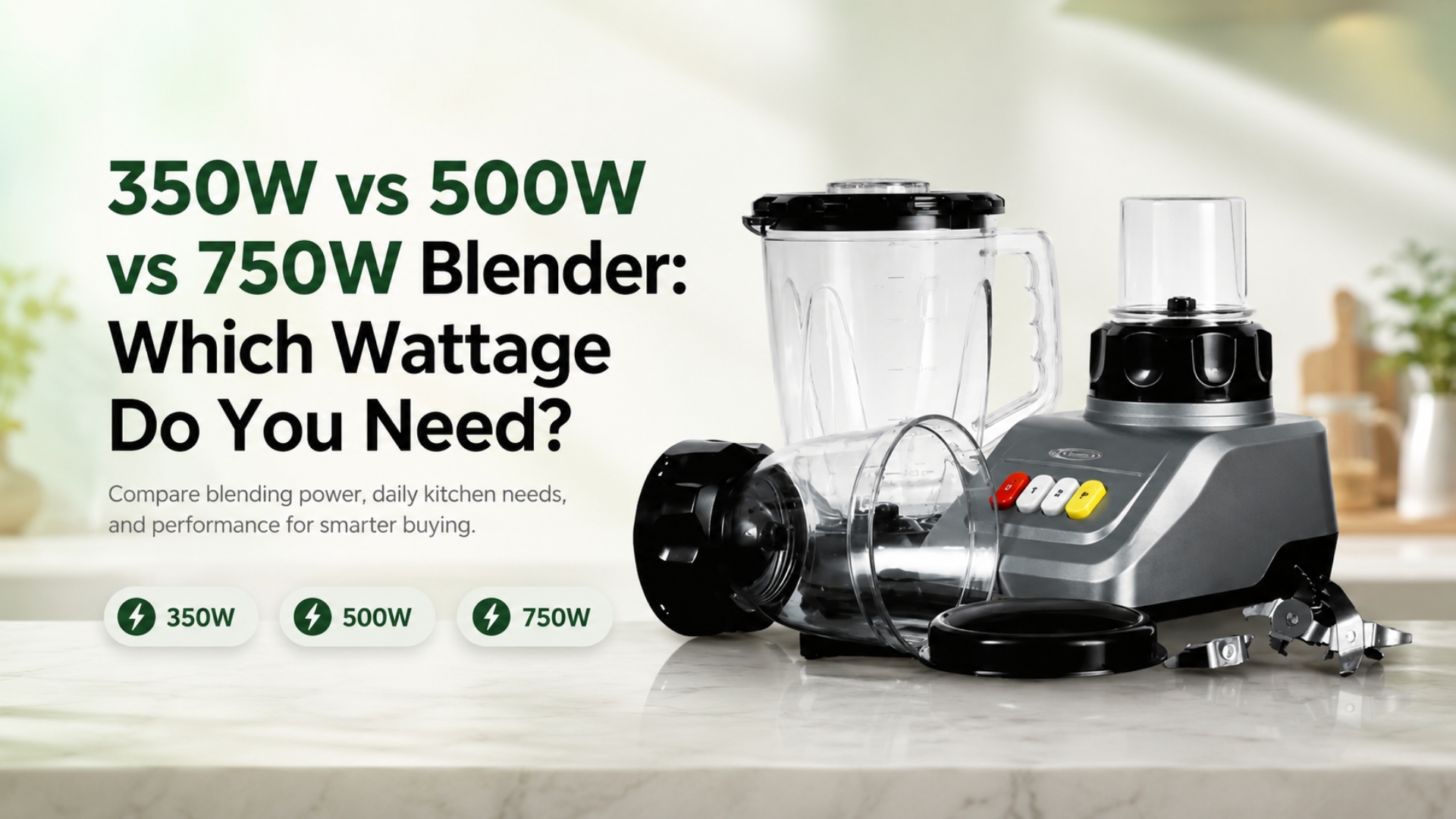
350W vs 500W vs 750W Blender: Which Wattage Do You Need?
Blender wattage is one of the easiest specifications to compare, but it is also one of the most misunderstood. A 750W blender is not automatically the right purchase for every kitchen, and a 350W model is not automatically weak. The correct choice depends on ingredients, batch size, jar design, blade system, run time and how often the appliance is used.
This blender wattage guide compares the common 350W, 500W and 750W ranges. These are general market categories. Yashica’s audited YA-323 juicer, blender and dry mill is listed at 600W, while the YA-223 blender page does not publish wattage.
What does blender wattage tell you?
Wattage shows the appliance’s rated electrical input. It can help shoppers understand the general power class, but it does not measure blade sharpness, jar circulation, motor durability or final texture. Two blenders with the same wattage can perform differently.
350W vs 500W vs 750W blender comparison
| Wattage class | Typical suitable tasks | Possible limitations |
|---|---|---|
| Around 350W | Milkshakes, soft fruit, light sauces and small wet blends | May struggle with dense mixtures or repeated heavy grinding |
| Around 500W | Regular family drinks, chutney, moderate blending and some grinding | Still requires correct jar and attachment for dry spices |
| Around 750W | Larger batches and more demanding ingredients where the manufacturer permits them | Higher price and electrical load; not a substitute for correct blades |
When a 350W blender may be enough
Around 350W may suit a student, couple or small household making banana shakes, lassi, soft-fruit smoothies and light sauces. Avoid filling the jar to the top or running the motor continuously. Hard spices should be processed only in a compatible grinder cup.
When a 500W blender makes sense
A 500W class blender is often a middle option for families preparing drinks, chutney and routine kitchen mixtures. It may offer more flexibility without moving into a high-power category. Check whether the appliance includes pulse control and a separate grinder attachment.
When a 750W blender may be useful
Around 750W may suit larger households or frequent use with denser ingredients, but buyers should still read the manual. Wattage does not automatically mean the blender can crush ice, grind meat or process hot food.
Where does a verified 600W Yashica model fit?
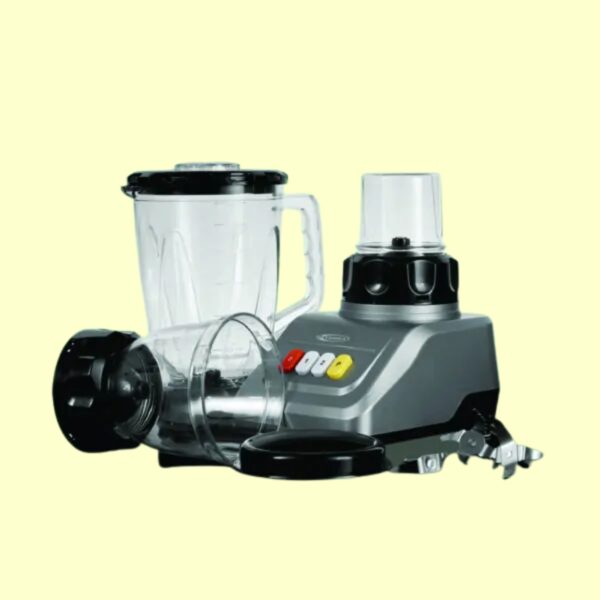
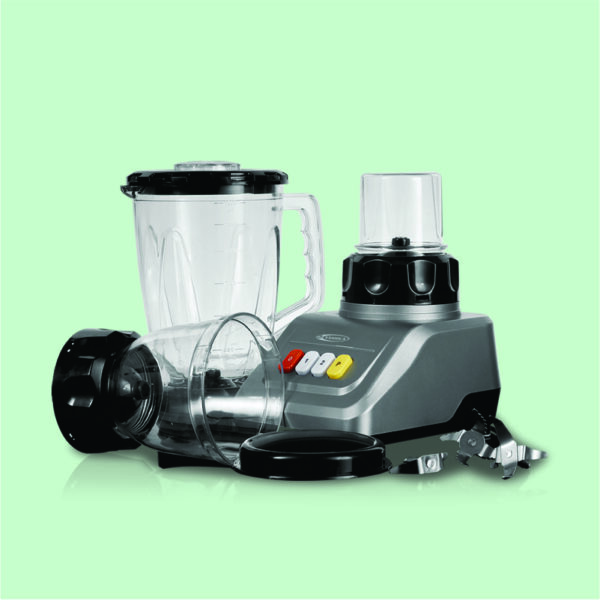
The Yashica YA-323 juicer, blender and dry mill is listed with a 600-watt motor, a 1000ml clear glass container and a separate grinder cup. It sits between the 500W and 750W comparison points, making it useful as a verified reference for shoppers who also need a juicing function.
The YA-223 blender, mill and grinder lists a 1.6-litre jar, grinder cups, two speeds and pulse control, but its audited page does not show wattage. Do not assign it a power rating based on appearance or another seller’s listing.
Choose wattage by Pakistani kitchen task
Milkshakes and lassi
Soft fruit, milk and yoghurt usually need less power than dry grinding. Jar capacity, lid seal and easy cleaning may matter more than the highest wattage.
Green chutney
Chutney needs a jar or cup that can circulate a small quantity. Pulse control can prevent over-processing. Add liquid gradually rather than flooding the mixture.
Dry masala
Use a grinder cup designed for dry ingredients. A large blender jar may throw small spices away from the blade. Dry the spices completely before grinding.
Dense pastes
Ginger-garlic paste and thick mixtures require short pulses, scraping between runs and enough liquid where the recipe allows. Continuous operation can heat the motor.
Electricity and low-voltage considerations
A 750W appliance uses more power while running than a 350W appliance, but blenders generally operate for short periods. Monthly cost depends on actual minutes of use. In low-voltage areas, do not repeatedly force-start the motor. Use a firm wall socket and avoid thin extension leads.
Features that matter alongside wattage
- Correct jar capacity for family portions
- Separate grinder cup for spices
- Pulse and speed control
- Secure lid and stable base
- Manufacturer-approved ingredient types
- Availability of cleaning and support guidance
Browse the Yashica small-appliance category and compare this advice with the brand’s essential kitchen-appliance checklist for Pakistan.
Frequently asked questions
Is 350W enough for milkshakes?
It can be enough for soft fruit and normal portions when the jar is not overloaded.
Is 500W good for chutney?
It can be suitable when the appliance includes a compatible small cup or jar and pulse control.
Does 750W mean the blender can crush ice?
No. Ice suitability must be stated by the manufacturer.
How many watts is Yashica YA-323?
The official page lists a 600-watt motor.
How many watts is Yashica YA-223?
The audited product page does not publish wattage.
Should I buy the highest wattage?
Buy the power class and attachments that match your ingredients, batch size, frequency and budget.
Conclusion
Choose around 350W for light blending, around 500W for broader everyday use and around 750W for more demanding permitted tasks. Compare wattage with jar design, grinder attachments, controls and safe operating time instead of treating power as the only measure of quality.