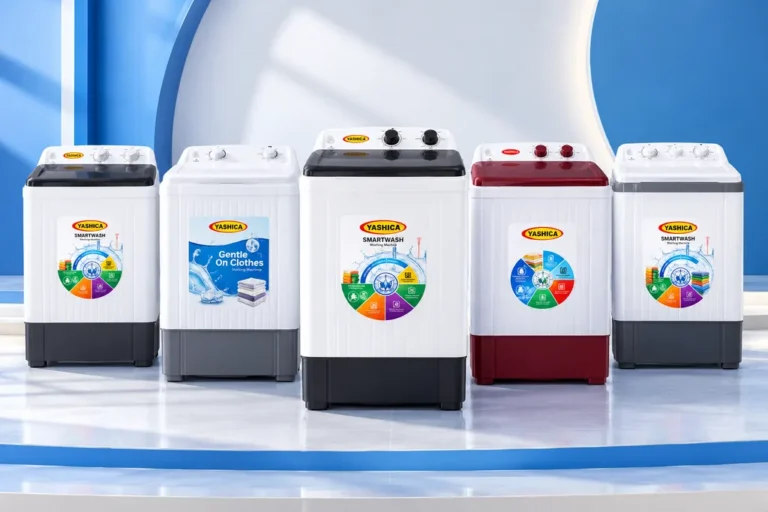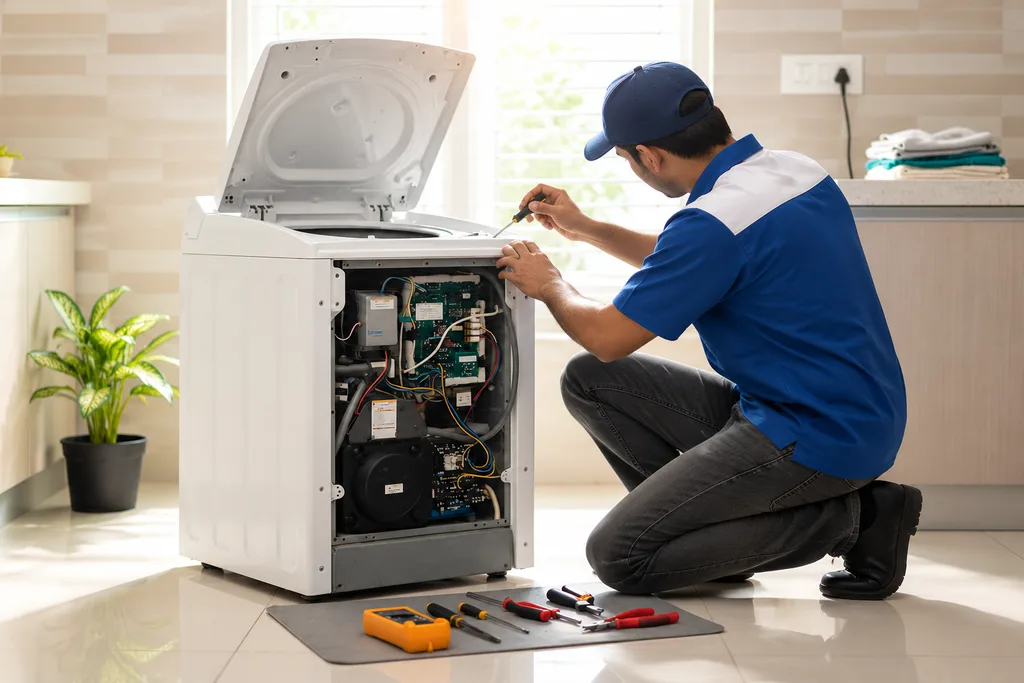
Common washing machine problems can range from slow drainage and unusual noise to water leakage, excessive vibration, bad odors, or a machine that refuses to start.
Some problems are caused by loading, detergent, installation, or routine maintenance. Others may indicate an electrical or mechanical fault that requires professional inspection.
For Pakistani households that use washing machines frequently, recognizing early warning signs can help prevent avoidable disruption and reduce the risk of making a minor problem worse.
This guide explains common washing machine problems, safe checks you can perform, and practical ways to prevent them.
Common Washing Machine Problems: What Usually Causes Them?
Washing-machine issues can be linked to:
- overloaded laundry
- uneven loads
- blocked or kinked hoses
- unsuitable detergent quantity
- poor drainage
- unstable installation
- interrupted electricity or water supply
- neglected cleaning
- worn mechanical or electrical components
The exact cause depends on the machine’s design.
Safe troubleshooting should focus on accessible parts only. Internal electrical, motor, pump, or wiring repairs should be left to qualified service personnel.
Washing Machine Problems at a Glance
| Problem | Possible Cause | First Safe Check |
|---|---|---|
| Not starting | Power or control issue | Check supply and operating settings |
| Not filling | Water supply or inlet issue | Check tap and visible hose |
| Not draining | Drain hose or blockage | Inspect accessible drainage |
| Excessive noise | Loose items or unbalanced load | Stop and inspect load |
| Strong vibration | Uneven load or placement | Check balance and surface |
| Water leakage | Hose, drain or internal fault | Stop use and inspect safely |
| Poor cleaning | Load, detergent or settings | Review washing method |
| Bad odor | Moisture or residue | Follow approved cleaning routine |
| Stops mid-cycle | Power, overload or internal issue | Review manual before restart |
| Clothes remain wet | Drainage or spin issue | Confirm machine functions |
This table provides general guidance rather than a definitive diagnosis.
Washing Machine Not Starting
If a washing machine does not start, possible causes include:
- loose or disconnected plug
- interrupted electricity
- incorrectly selected controls
- lid or door not closed properly on compatible models
- damaged cord
- internal electrical fault
What Can You Check?
Confirm that the appliance is connected to a suitable electrical supply and that the required controls are correctly set.
If you notice:
- burning smell
- sparking
- damaged wiring
- repeated circuit-breaker trips
stop using the appliance and seek qualified support.
Never bypass safety switches or open electrical panels.
Washing Machine Not Filling With Water
A washing machine may fail to fill properly because of:
- interrupted household water supply
- closed tap
- low pressure
- kinked inlet hose
- blocked accessible inlet screen
- faulty inlet component
Not every washing machine fills automatically, so troubleshooting should always match the exact model.
Check visible hoses and household water availability without dismantling internal valves.
Washing Machine Not Draining Water
Slow or failed drainage is one of the more common washing-machine complaints.
Possible causes include:
- kinked drain hose
- blocked household drain
- user-accessible filter obstruction
- incorrect hose position
- pump or internal drainage problem
Check the visible drain hose and external drain first.
If your machine has a removable filter, follow the manufacturer’s instructions before opening it because retained water may escape.
Do not dismantle the pump yourself.
Washing Machine Making Unusual Noise
Unexpected banging, grinding, knocking, or unusually loud vibration should not be ignored.
Common causes include:
- coins or other objects in the wash area
- uneven laundry distribution
- overloading
- unstable placement
- worn mechanical components
Stop the machine before checking the load.
The Yashica YA-1000-WM is described by Yashica as having a low-noise, quiet and stable design. These are manufacturer claims and do not mean that unusual noises can never develop.
Washing Machine Vibrating Excessively
Strong vibration can result from:
- uneven flooring
- unbalanced laundry
- overloading
- incorrect positioning
- installation issues
- worn internal components
Place the machine on a stable surface and distribute laundry according to the manufacturer’s guidance.
Avoid exceeding the rated washing capacity.
For example, the Yashica YA-1800-WM is listed with a 10kg washing capacity. That figure should be treated as a rated capacity, not permission to pack the tub with bulky garments beyond the manufacturer’s instructions.
Washing Machine Leaking Water
Water leakage should be taken seriously because it can damage flooring and create electrical hazards.
Possible causes include:
- loose external hose connections
- damaged hoses
- blocked drainage
- excessive detergent foam
- damaged seals where fitted
- internal component faults
If you notice a leak:
- Stop the machine if it is safe.
- Keep away from pooled water near electrical connections.
- Shut off the water supply where appropriate.
- Inspect only visible external hoses and connections.
If water appears to originate inside the cabinet, arrange professional inspection.
Clothes Are Not Getting Properly Cleaned
Poor cleaning does not always mean the machine is defective.
Possible reasons include:
- overloading
- too much or too little detergent
- unsuitable washing duration
- incorrect water level
- inappropriate settings
- heavily soiled garments
Several Yashica washing machines list a scrub board with double storm pulsator, including the YA-1000-WM. This is a manufacturer-listed washing feature, but actual results also depend on detergent, load size, fabric, and correct operation.
Washing Machine Producing Bad Odors
Unpleasant smells can develop because of:
- detergent residue
- trapped moisture
- fabric-softener buildup
- dirty accessible filters
- wet clothes left inside
- limited ventilation
Remove laundry promptly and allow the machine to dry safely between uses.
For a complete maintenance routine, read How to Clean a Washing Machine. The current Yashica cleaning guide also recommends following model-specific instructions rather than assuming all machines support the same cleaning chemicals or cycles.
Washing Machine Stops During a Cycle
Possible causes include:
- electricity interruption
- overloaded washing compartment
- safety mechanism activation
- incorrect setting
- internal motor or electrical fault
Check the power supply and review the operating instructions.
Do not repeatedly restart a machine that:
- smells hot
- produces smoke
- sparks
- repeatedly trips the breaker
These symptoms require professional attention.
Clothes Remain Too Wet After Washing
Laundry may remain excessively wet because:
- drainage is incomplete
- the load is uneven
- the selected setting does not include normal spinning
- a spin-related component has failed
- the washing machine does not have the assumed spin function
Always confirm the functions of the exact machine before diagnosing a fault.
How to Prevent Common Washing Machine Problems
A few habits can reduce avoidable issues.
Use the Correct Laundry Load
Follow the rated capacity and avoid tightly packing clothes into the washing compartment.
Check Clothing Pockets
Remove:
- coins
- keys
- pins
- clips
- tissues
- small loose items
before washing.
Use Detergent Correctly
More detergent does not automatically produce cleaner clothes.
Excess foam or residue can contribute to washing and drainage problems.
Keep Hoses and Drainage Clear
Periodically inspect accessible hoses for:
- kinks
- cracks
- leakage
- unusual moisture
Clean the Machine Regularly
Follow the manufacturer’s approved cleaning schedule for accessible areas and filters.
Install the Machine Properly
Use a stable surface and suitable electrical, water, and drainage connections.
When Should You Contact a Technician?
Seek professional help if the machine has:
- repeated leaks
- persistent drainage failure
- grinding or severe mechanical noise
- burning smell
- electrical sparking
- repeated breaker trips
- recurring cycle failure
Do not attempt internal electrical or mechanical repairs without appropriate training.
Yashica customers can use the Yashica Contact Page for current support information. The live contact page lists customer-support contact methods and Gujranwala location information.
Should You Repair or Replace the Washing Machine?
Not every problem requires replacement.
Consider:
- type of fault
- repair estimate
- age and condition
- availability of parts
- recurrence of problems
- whether the machine still meets your household needs
If the washing machine no longer suits your laundry requirements, compare replacement options before buying.
Read Buying Washing Machines in Pakistan or use Compare Washing Machines in Pakistan to evaluate capacity, body construction, features, and support.
Frequently Asked Questions
What are the most common washing machine problems?
Common issues include failure to start, poor filling or drainage, unusual noise, excessive vibration, leakage, odors, poor cleaning, and incomplete cycles.
Why is my washing machine not draining?
Possible causes include a kinked drain hose, blocked external drain, accessible filter obstruction, or an internal drainage problem.
Why does my washing machine vibrate too much?
An uneven load, unstable surface, overloading, or installation issue may cause excessive vibration. Persistent vibration may require professional inspection.
Why does my washing machine smell bad?
Moisture, detergent residue, fabric-softener buildup, dirty filters, or wet laundry left inside can contribute to odors.
Can overloading cause washing machine problems?
Yes. Overloading can interfere with normal washing movement and place extra strain on the machine. Follow the rated capacity and loading instructions.
When should I call a washing machine technician?
Seek professional help for persistent leaks, repeated electrical trips, burning smells, severe mechanical noises, drainage problems that do not respond to safe checks, or internal repairs.
Prevent Problems and Keep Your Washing Machine Running Properly
Many common washing machine problems can be reduced through correct loading, suitable detergent use, proper installation, regular cleaning, and early attention to unusual symptoms.
However, persistent leaks, electrical faults, severe noise, or recurring drainage problems should not be treated as routine DIY repairs.
If your current machine needs replacement, browse the Yashica Washing Machine Collection to compare currently listed washing-machine models and capacities. Yashica’s live shop currently shows 14 washing-machine products.
Editorial Verification: Recheck product availability, support information, specifications, internal links, and maintenance guidance against the official Yashica website before publication. Troubleshooting should always follow the instructions for the specific washing-machine model.