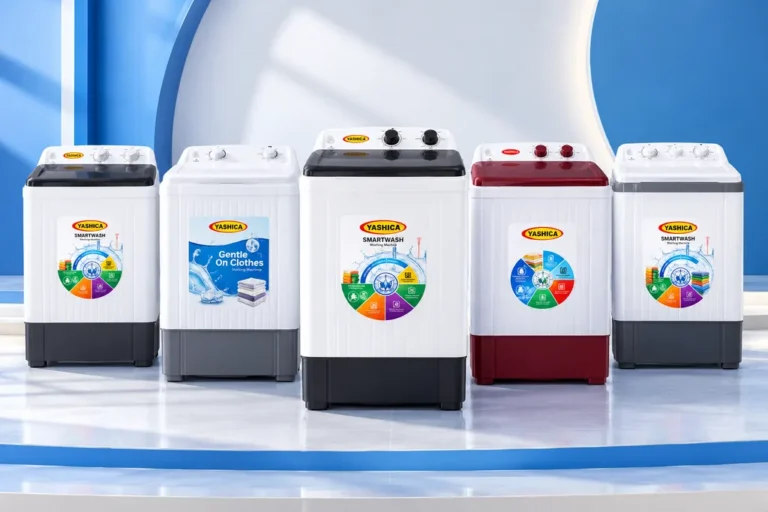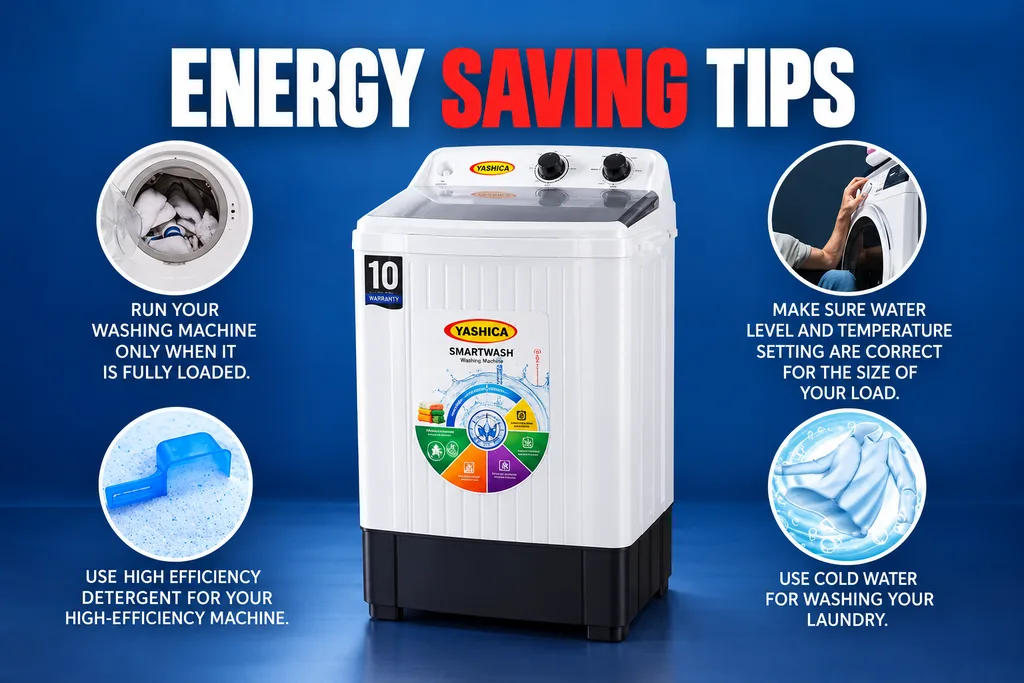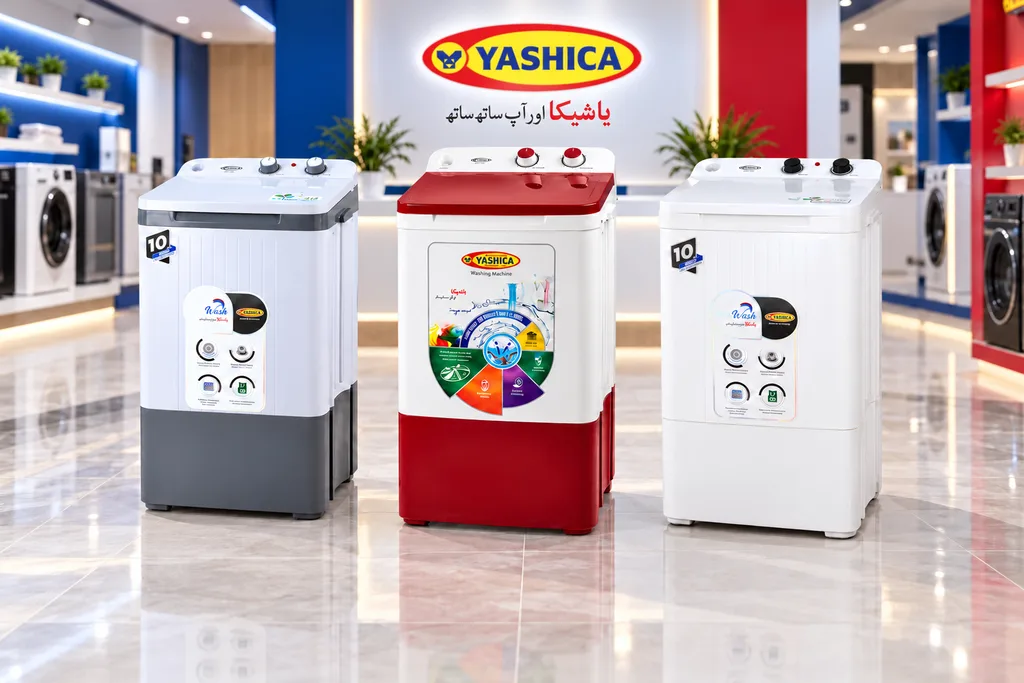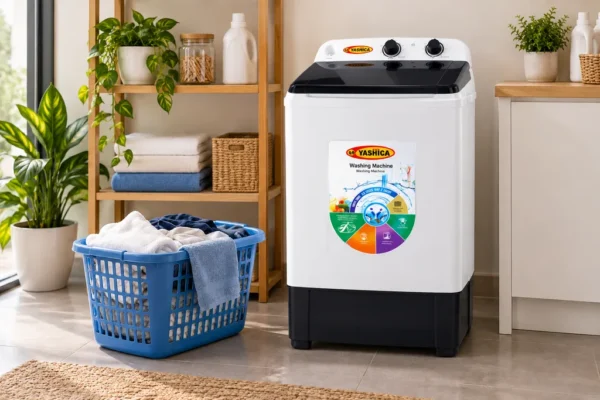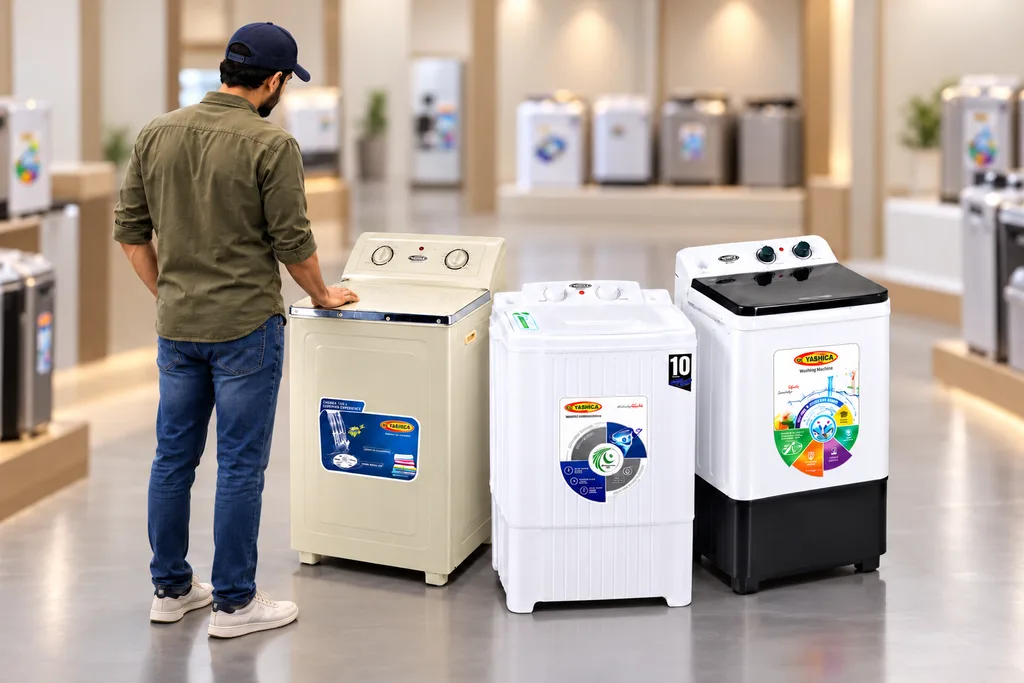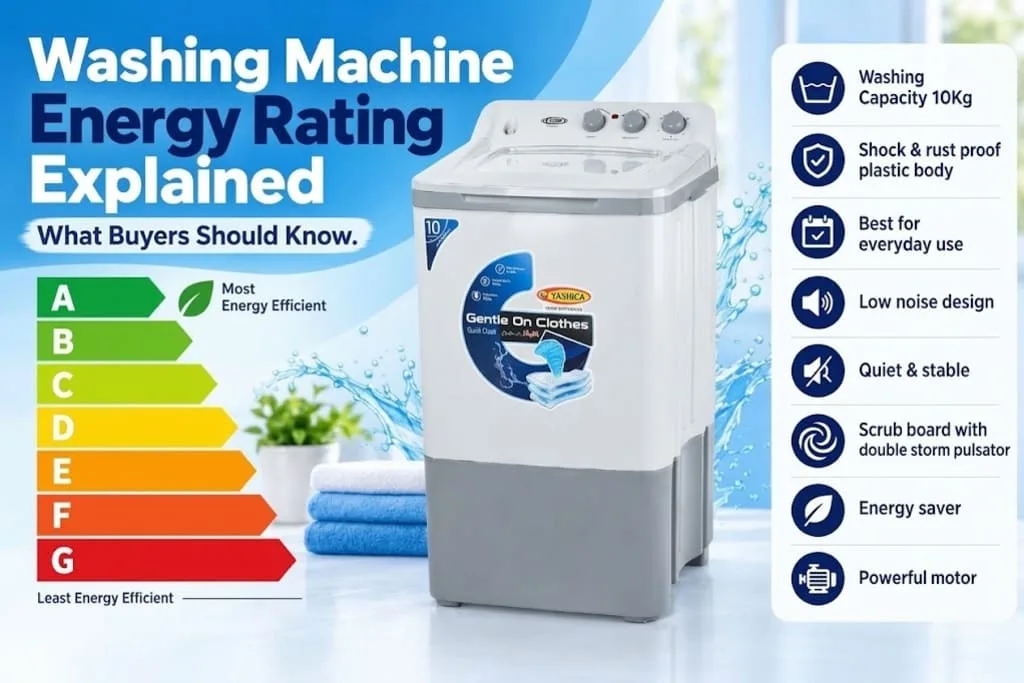
Understanding a washing machine energy rating can help buyers estimate electricity use more intelligently, but the label or marketing term on a product should always be checked carefully.
In Pakistan, buyers may come across phrases such as “energy saver,” “low power,” or “efficient motor.” These descriptions can be useful, but they are not automatically the same as a standardized tested energy rating.
Yashica currently describes several washing-machine models as “energy saver,” including the YA-1000-WM and YA-18-WM. However, their product pages do not publish a standardized star rating or measured kWh-per-cycle figure.
This guide explains what energy ratings mean, how wattage and kWh differ, and what buyers should verify before choosing a washing machine.
Washing Machine Energy Rating: What Does It Actually Mean?
An energy rating is meant to help consumers understand how efficiently an appliance uses electricity compared with other products tested under a defined method.
A useful energy-efficiency comparison may include:
- rated power in watts
- electricity consumption per cycle
- kWh per cycle
- standardized efficiency test results
- cycle duration
- water-heating requirements
- load size used during testing
A marketing phrase such as “energy saver” does not by itself provide all of this information.
Does Pakistan Have an Energy Star Rating for Washing Machines?
Pakistan has an official energy-labelling framework managed by NEECA.
Its Pakistan Energy Label uses star ratings for covered appliances, with higher star levels indicating greater tested efficiency.
However, NEECA’s currently published appliance test-parameter list includes categories such as:
- fans
- room air conditioners
- refrigerators
- motors
- LED lights
Washing machines are not listed in that published test-parameter document.
That means buyers should not assume that every washing-machine “energy rating” they see is an official Pakistan Energy Label rating.
If a seller claims a certified rating, ask for the relevant documentation.
Yashica Washing Machines and Energy-Saver Claims
Yashica currently lists several washing machines with “energy saver” in their published product descriptions.
| Model | Listed Capacity | Body Construction | Energy-Related Claim |
|---|---|---|---|
| YA-1000-WM | 10kg | Plastic | Energy saver |
| YA-18-WM | 10kg | Painted metal | Energy saver |
These are manufacturer claims rather than standardized comparative ratings.
Yashica YA-1000-WM
The Yashica YA-1000-WM is listed with:
- 10kg washing capacity
- shock and rust proof plastic body
- scrub board with double storm pulsator
- low-noise design
- quiet and stable operation claim
- energy-saver claim
- powerful motor description
The product page does not currently publish a standardized energy rating or measured kWh-per-cycle figure.
Yashica YA-18-WM
The Yashica YA-18-WM is also listed with:
- 10kg washing capacity
- painted metal body
- double storm pulsator
- low-noise design
- energy-saver claim
- powerful motor description
Again, the live product page does not provide a standardized star rating or per-cycle electricity figure.
Wattage vs kWh: What Is the Difference?
These two measurements are related, but they are not the same.
Watts
Watts describe power demand at a given moment.
Kilowatt-Hours
kWh describe how much electrical energy is used over time.
A simple estimate is:
Energy used (kWh) = Power (W) ÷ 1,000 × Operating Hours
For example, a hypothetical 500W washing machine operating for one hour would use:
500 ÷ 1,000 × 1 = 0.5 kWh
Actual machines may draw different power at different stages, so measured cycle-consumption data is more useful than wattage alone.
NEECA also provides an electricity-consumption calculator that uses wattage and operating time to estimate appliance energy use.
Why Cycle Duration Matters
Two machines can have similar wattage but different electricity use if their cycle lengths differ.
For example:
- Machine A may draw more power but run for less time.
- Machine B may draw less power but run longer.
That is why wattage alone should not be used to decide which machine is more efficient.
Where possible, compare:
- kWh per cycle
- cycle length
- load used during testing
- water-heating behavior
Does Washing Capacity Affect Energy Rating?
Capacity can affect total consumption, but bigger does not automatically mean less efficient or more efficient.
A 10kg, 12kg, and 20kg machine serve different load requirements.
Yashica currently lists washing-machine capacities including:
- 10kg
- 12kg
- 20kg
A machine that matches your normal load can help reduce unnecessary repeat cycles.
However, an oversized machine does not automatically save electricity.
Does Water Heating Increase Electricity Use?
Yes, where the machine includes an electric water-heating function.
Heating water can use significant energy, so machines with internal heaters should be compared carefully.
Before buying, check whether the model has:
- internal water heating
- temperature controls
- cold-water wash options
- externally supplied water only
Do not assume every washing machine heats water internally.
How Should Buyers Compare Energy Efficiency?
When comparing washing machines, use this checklist:
| Energy Factor | What to Verify |
|---|---|
| Rated power | Published wattage |
| Per-cycle consumption | kWh where available |
| Cycle duration | Comparable wash program |
| Capacity | Similar rated load |
| Water heating | Present or absent |
| Motor information | Published technical data |
| Energy label | Certified documentation if claimed |
| Warranty | Model-specific terms |
The most reliable comparison uses measurable information rather than marketing wording.
For a broader model comparison, read Compare Washing Machines in Pakistan.
Which Budget Washing Machines Offer Good Value in Pakistan?
Good value is not determined by energy wording alone.
A budget washing machine can offer good value when it combines:
- suitable capacity
- manageable purchase price
- appropriate features
- practical electricity use
- reliable support
- suitable installation requirements
If energy consumption matters strongly to your household, request actual technical consumption data before comparing numerical savings.
What Should You Check Before Buying?
Before choosing an energy-conscious washing machine, confirm:
- exact model number
- rated washing capacity
- machine type
- rated wattage
- kWh-per-cycle data where available
- water-heating features
- cycle duration
- body construction
- warranty
- current price
- stock availability
If a seller uses terms such as “energy saver,” ask whether measured energy data or certification is available.
Frequently Asked Questions
What does a washing machine energy rating mean?
It indicates how efficiently a washing machine uses electricity under a defined test method. The exact meaning depends on the rating system being used.
Does Pakistan have washing machine star ratings?
Pakistan has a formal energy-labelling system, but NEECA’s currently published appliance test-parameter list does not include washing machines. Buyers should verify any claimed rating before relying on it.
Is an “energy saver” washing machine always more efficient?
Not necessarily. “Energy saver” may be a manufacturer description. A reliable comparison requires measurable electricity-consumption data.
What is more useful: wattage or kWh per cycle?
kWh per cycle is generally more useful because it reflects actual energy consumed during a washing cycle, while wattage only describes power demand.
Do larger washing machines use more electricity?
Not automatically. Electricity use depends on motor design, cycle duration, load, machine type, and operating conditions.
Where can I compare Yashica washing machines?
Browse the Yashica Washing Machine Collection for current models, capacities, and published features.
Understand the Energy Information Before You Buy
A washing machine energy rating is useful only when you understand what it actually measures.
Do not rely solely on phrases such as “energy saver,” “powerful motor,” or “low power.”
Compare wattage, kWh-per-cycle data, capacity, cycle length, water-heating requirements, and any verified certification information available for the model.
For more practical electricity-saving guidance, read the Energy Efficient Washing Machine Guide.
If you are still comparing models, browse the Yashica Washing Machine Collection or read Buying Washing Machines in Pakistan.
Editorial Verification: Recheck NEECA labelling rules, Yashica product specifications, published energy information, official links, prices, stock, and warranty terms before publication. Do not publish a star rating or quantified electricity-saving claim unless it is supported by model-specific verified documentation.