Practical washing machine energy saving does not always require buying a new appliance. Everyday laundry habits can also affect how often the machine runs and how much unnecessary electricity is used.
For Pakistani households, useful changes include planning suitable loads, avoiding repeated wash cycles, using the correct detergent quantity, maintaining the machine, and choosing appropriate settings.
Yashica currently describes several washing-machine models as “energy saver,” including the YA-1000-WM. However, the current product page does not publish a standardized kWh-per-cycle figure, so exact electricity savings should not be assumed from that claim alone.
This guide focuses on practical ways to reduce avoidable washing-machine electricity use during everyday laundry.
Washing Machine Energy Saving: Which Habits Matter Most?
The most useful everyday habits include:
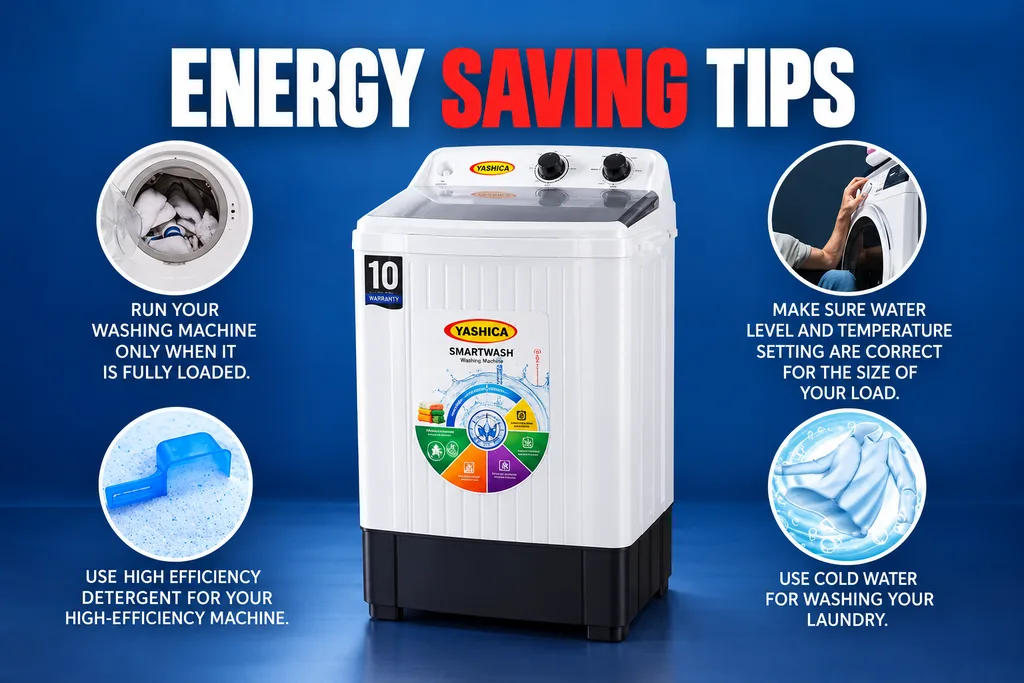
- washing appropriately sized loads
- avoiding repeated very small loads
- not overloading the machine
- choosing suitable wash settings
- avoiding unnecessary repeat washing
- measuring detergent correctly
- using cooler water where the machine and fabrics allow it
- maintaining accessible filters and drainage
- keeping the machine operating according to manufacturer instructions
Small improvements can add up when laundry is washed several times each week.
1. Plan Laundry Loads More Carefully
Running many unnecessary small loads can increase total operating time.
Where fabric type, colour and care instructions allow, combine compatible garments into appropriately sized loads.
The goal is not to fill the machine as much as possible.
Instead, stay within the manufacturer’s approved loading instructions.
Avoid Both Extremes
Very small repeated loads may require more cycles.
Overloaded loads can interfere with normal washing movement and may result in poor cleaning or repeat washing.
A suitable load balances capacity with effective washing.
2. Match the Machine Capacity to Your Laundry Routine
Capacity can influence how efficiently household laundry is organized.
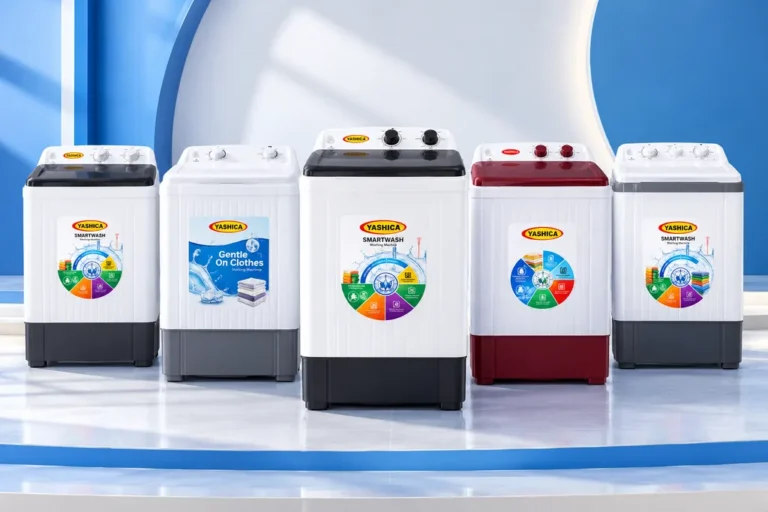
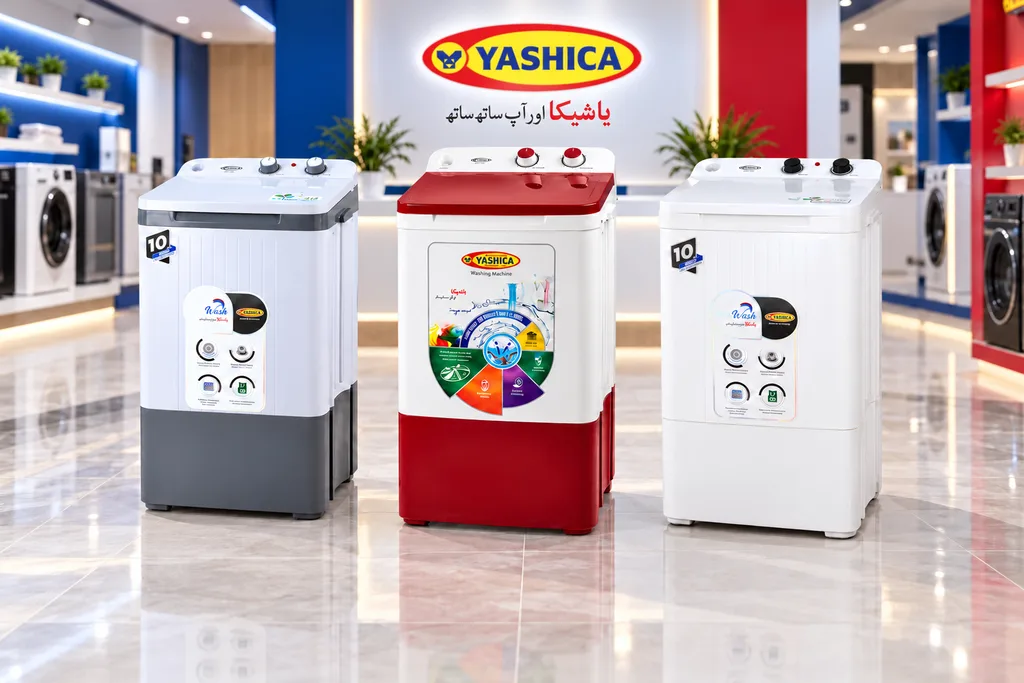
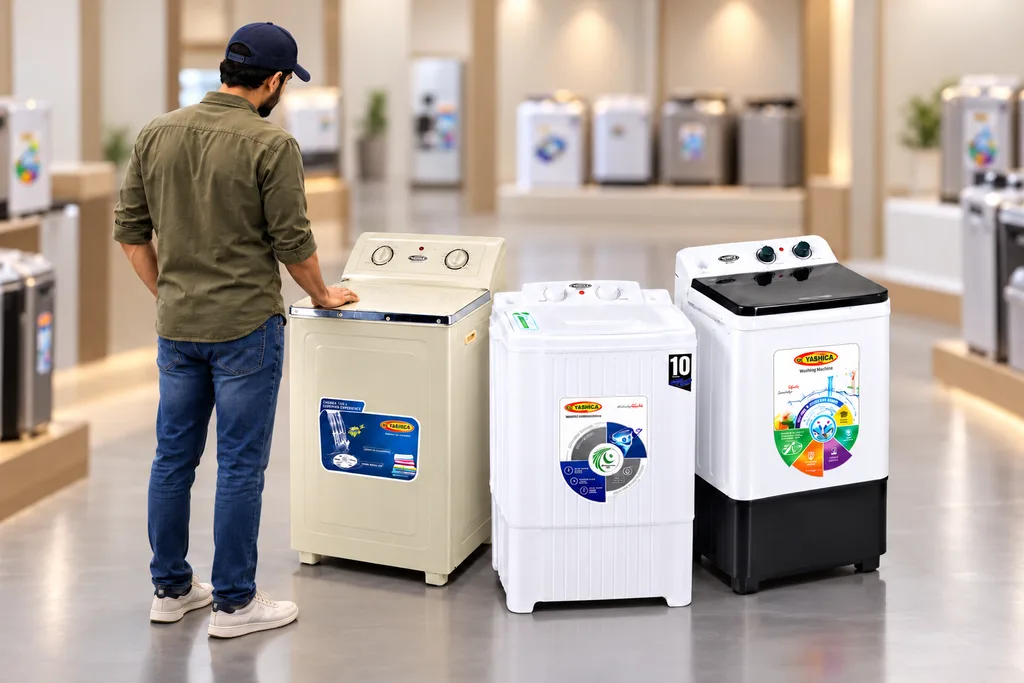
Yashica’s current washing-machine collection includes several capacity options, including 10kg, 12kg and 20kg models.
A larger machine is not automatically more energy efficient.
Likewise, a machine that is consistently too small may require additional cycles.
The correct capacity depends on:
- typical laundry volume
- washing frequency
- bulky items
- available space
- household routine
For buying-level energy guidance, use the Energy Efficient Washing Machine Guide.
3. Use Appropriate Wash Settings
If your washing machine offers different washing durations or programs, choose a setting appropriate for the laundry.
Not every load needs the longest possible wash.
Consider:
- fabric type
- soil level
- load size
- manufacturer guidance
Using a longer setting than necessary can increase operating time without necessarily improving the result.
Do not shorten a required wash cycle simply to save electricity if it compromises cleaning or fabric care.
4. Avoid Unnecessary Repeat Washing
A second wash cycle immediately doubles the washing work and can increase electricity and water use.
Repeat washing may happen because of:
- overloading
- incorrect detergent quantity
- unsuitable wash duration
- poor load sorting
- incorrect water level
- inappropriate settings
Yashica’s troubleshooting guidance also notes that poor cleaning can result from excessive laundry, incorrect detergent quantity or unsuitable washing conditions.
Getting the first wash right can be more useful than trying to compensate with another cycle.
5. Measure Detergent Correctly
Using extra detergent does not automatically make clothes cleaner.
Too much detergent may cause:
- excess foam
- residue
- additional rinsing
- buildup inside accessible areas
Follow the detergent instructions and adjust for:
- load size
- fabric condition
- water conditions
- machine guidance
Correct detergent use can reduce the chance of needing additional rinsing or rewashing.
6. Use Cooler Water Where Appropriate
Water heating can increase electricity use in washing machines that have an internal electric heater.
If your machine provides temperature selection, cooler water may reduce energy used for heating when:
- the fabric-care label allows it
- the laundry does not require a hotter wash
- the machine supports that setting
However, not every washing machine heats water internally.
Some models use externally supplied water, so changing the supplied water temperature does not affect the machine’s own electrical consumption in the same way.
Always check the exact machine design first.
7. Keep Your Washing Machine Clean
Regular maintenance supports normal operation.
Accessible areas may need attention for:
- detergent residue
- lint
- debris
- drainage obstruction
- trapped moisture
The Cleaning Washing Machine Guide recommends following model-specific cleaning instructions and not assuming every washing machine supports the same cleaning chemicals or cycles.
Routine cleaning does not guarantee a fixed electricity-saving percentage, but it can reduce problems that lead to inefficient washing or repeat cycles.
8. Check Drainage and Water Connections
A machine that does not fill or drain correctly may not operate as intended.
Periodically inspect accessible:
- inlet hoses
- drain hoses
- visible connections
- external drainage
Look for:
- kinks
- leaks
- visible damage
- blocked drainage
Do not dismantle pumps, valves or electrical components during routine maintenance.
Persistent drainage problems should be assessed properly rather than repeatedly running the machine.
Yashica YA-1000-WM: Energy-Related Product Example
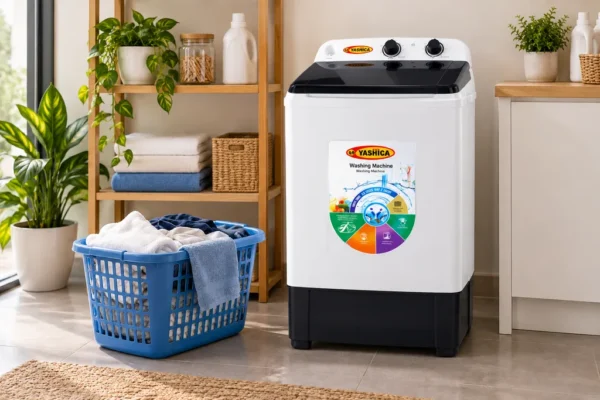
The Yashica YA-1000-WM is listed with:
- 10kg washing capacity
- shock and rust proof plastic body
- double storm pulsator
- low-noise design
- quiet and stable operation claim
- energy-saver claim
- powerful motor description
These are manufacturer-listed features. The live page does not publish a standardized kWh-per-cycle figure or a quantified electricity-saving percentage.
That distinction is important.
When comparing energy use, measurable consumption data is more useful than marketing wording alone.
How Can You Estimate Washing Machine Electricity Use?
A basic electricity calculation is:
Energy used (kWh) = Power in watts ÷ 1,000 × operating hours
For example, a hypothetical 500W appliance operating continuously for one hour would use:
500 ÷ 1,000 × 1 = 0.5 kWh
This is only an illustrative calculation.
Actual washing machines may draw different power during different stages of operation.
Pakistan’s NEECA also provides an electricity-consumption calculator that can estimate appliance kWh use and potential savings. Its results are indicative and may differ from actual bills.
Which Everyday Laundry Habits Can Reduce Electricity Use?
Use this checklist:
| Laundry Habit | Why It Helps |
|---|---|
| Combine compatible laundry | May reduce unnecessary cycles |
| Avoid overloading | Supports normal washing movement |
| Use suitable settings | Avoids unnecessarily long operation |
| Measure detergent | Can reduce residue and repeat rinsing |
| Avoid repeat washes | Prevents duplicated energy use |
| Maintain the machine | Supports normal operation |
| Check hoses and drainage | Helps prevent avoidable cycle problems |
| Use cooler water where suitable | May reduce heating energy on compatible machines |
The most useful strategy is consistent everyday use rather than relying on one “energy-saving” feature.
Common Washing Machine Energy-Saving Mistakes
Running Many Very Small Loads
Repeated small cycles can increase total operating time.
Overloading to Avoid Another Cycle
Too much laundry can reduce washing effectiveness and may lead to rewashing.
Choosing the Longest Cycle Every Time
Use a setting appropriate for the laundry rather than automatically selecting maximum duration.
Using Too Much Detergent
Extra detergent can increase residue and rinsing needs.
Assuming “Energy Saver” Means a Guaranteed Percentage
A manufacturer claim should not be converted into a numerical savings claim without verified data.
Ignoring Maintenance
Drainage, residue and loading problems can lead to inefficient routines and repeat cycles.
What Should You Check When Buying an Energy-Conscious Washing Machine?
If you are also choosing a new machine, compare:
- suitable rated capacity
- published wattage
- measured kWh-per-cycle data where available
- cycle duration
- water-heating functions
- motor information
- washing mechanism
- warranty
- current price
- service support
The Energy Efficient Washing Machine Guide explains these buying factors in more detail.
Frequently Asked Questions
How can I reduce washing machine electricity consumption?
Use appropriately sized loads, avoid unnecessary cycles, select suitable wash settings, measure detergent correctly and maintain the machine according to manufacturer instructions.
Does washing full loads save electricity?
Appropriately combining compatible laundry may reduce unnecessary repeated cycles. Do not exceed the manufacturer’s rated load or pack clothes too tightly.
Does cold-water washing save electricity?
It may reduce electricity used for water heating in machines with internal heaters. Not every washing machine heats water itself.
Does using less detergent save electricity?
Using the correct amount can help avoid excessive foam, extra rinsing and repeat washing. Use the recommended amount rather than simply using as little as possible.
Are Yashica washing machines energy efficient?
Yashica describes several washing machines as “energy saver.” However, current listings do not provide standardized per-cycle consumption figures that allow a quantified efficiency comparison.
How can I calculate washing machine electricity use?
Use power in kilowatts multiplied by operating time for a basic estimate. Actual cycle consumption may vary, so measured kWh-per-cycle data is preferable where available.
Reduce Unnecessary Energy Use in Everyday Laundry
Effective washing machine energy saving is largely about avoiding unnecessary work.
Plan suitable loads, use the correct settings, avoid repeat washing, measure detergent properly and keep the machine maintained.
These habits cannot guarantee a fixed reduction in your electricity bill, but they can help reduce avoidable washing-machine operation.
For current models, browse the Yashica Washing Machine Collection.
For broader household electricity guidance, read the Energy-Efficient Home Appliances Guide.
Editorial Verification: Recheck Yashica product specifications, energy claims, internal links and current NEECA guidance before publication. Do not publish a specific electricity-saving percentage unless supported by verified model-specific testing.