









Glass Top vs Stainless Steel Gas Stove: Complete Comparison
The top material changes how a gas stove or built-in hob looks, feels and is cleaned. Glass can create a modern seamless appearance, while stainless steel is familiar, practical and easier to assess for dents or scratches. Neither is automatically better for every Pakistani kitchen.
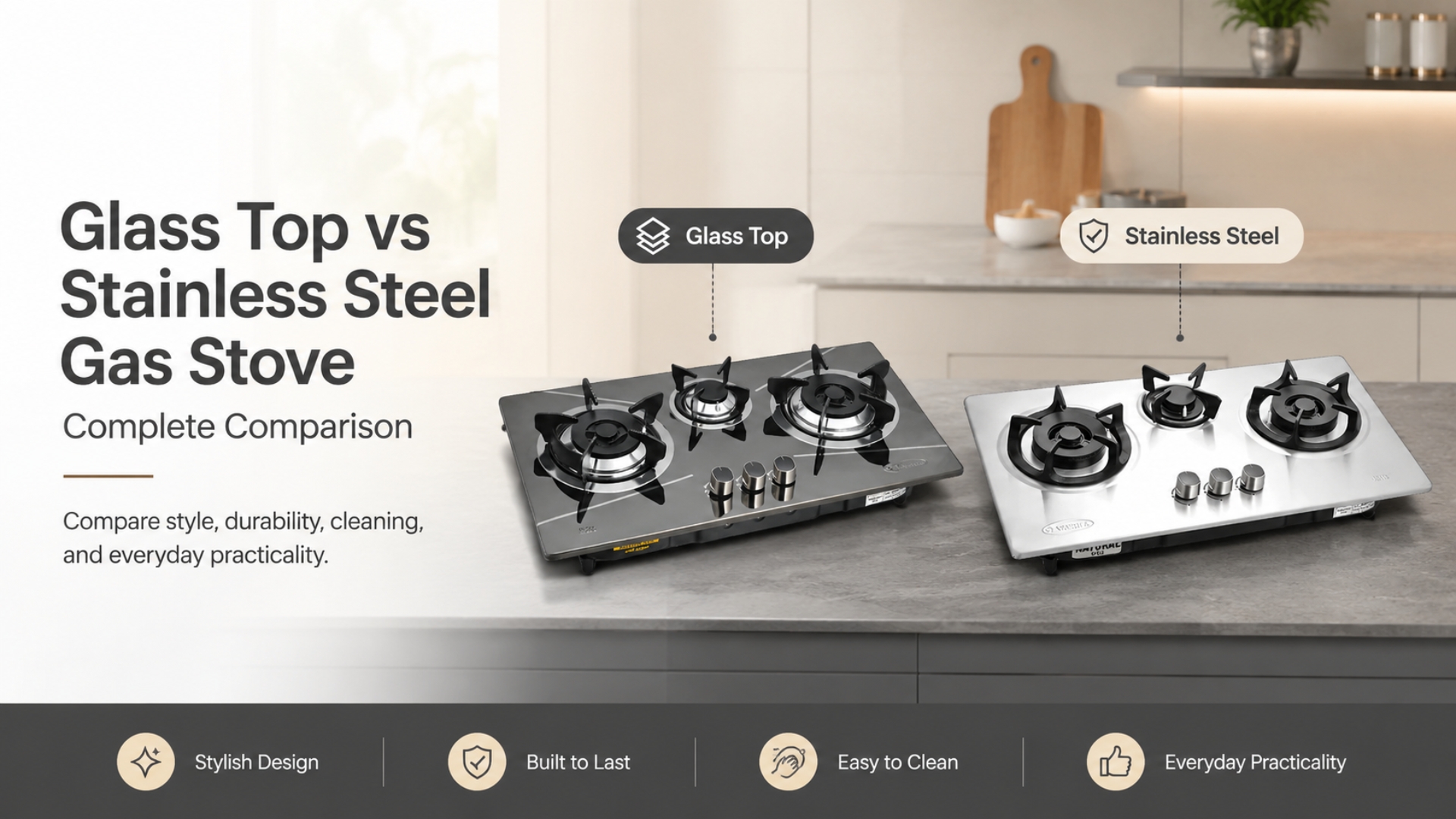
Yashica provides verified examples of both approaches. The YA-486 built-in hob is listed with an 8mm thick tempered glass top, while the YA-186 built-in hob uses a heavy-gauge steel top. Both list two large brass burners, one small burner, grey cast-iron pan trivets and 3V battery-operated auto ignition.
Glass top vs stainless steel gas stove comparison
| Factor | Tempered glass top | Stainless or steel top |
|---|---|---|
| Appearance | Modern and visually seamless | Traditional and professional-looking |
| Cleaning | Flat surface is easy to wipe when cool | Handles routine wiping but may show streaks |
| Impact concern | Needs protection from falling cookware and edge impacts | May dent rather than shatter |
| Heat marks | Spills can bake onto the surface | Discolouration can appear around burners |
| Care products | Requires non-abrasive glass-safe cleaning | Requires non-abrasive steel-safe cleaning |
Advantages of a glass-top hob
A glass surface fits well in a modern open kitchen and is easy to wipe after light spills. The YA-486’s listed 8mm tempered glass gives buyers a verified thickness reference, but thickness does not make the surface immune to impact, overheating or incorrect installation.
Best for
- Modern fitted kitchens
- Users who wipe spills after every cooking session
- Households using stable flat-bottom cookware
- Buyers prepared to use non-abrasive cleaners
Advantages of a steel-top hob
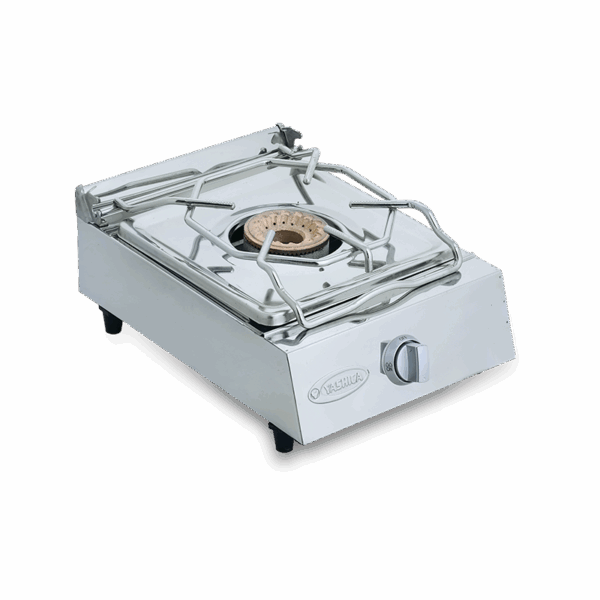
Steel is a familiar choice for busy family kitchens. It does not have the same glass-edge impact concern, and its surface is easy to inspect. Yashica’s YA-186, YA-286 and YA-386 models are listed with heavy-gauge steel tops in different finishes.
Best for
- Heavy everyday cooking
- Families frequently moving large degchis and karahis
- Users who prefer a traditional metal cooking surface
- Kitchens where appearance is secondary to straightforward care
Cleaning differences
Tempered glass
Allow the hob to cool, remove loose trivets and wipe with a soft damp cloth. Avoid steel wool, hard scrapers, abrasive powder and sudden cold water on a hot surface.
Steel or stainless steel
Use mild soap and wipe in the direction of the finish where visible. Dry the surface to reduce water marks. Avoid chlorine-heavy cleaners unless the manual permits them.
Pakistani cooking considerations
Large karahis and pressure cookers
Heavy cookware should be lowered gently rather than dropped. Confirm that the cast-iron trivet carries the weight without allowing the pan to touch the top.
Oil, masala and milk spills
Both materials should be cleaned after cooling. Repeatedly heating dried oil or milk can create stubborn marks.
Children and busy kitchens
A glass edge needs protection from hard impacts. A metal top may be more forgiving of accidental contact, although all gas appliances require supervision.
Installation matters as much as material
A built-in hob must be supported correctly and fitted to the stated cutout. The YA-486 and steel-top hobs list a case size of about 28 by 16 inches and a base size of about 24 by 13 inches. Verify the current product dimensions before cutting stone or wood.
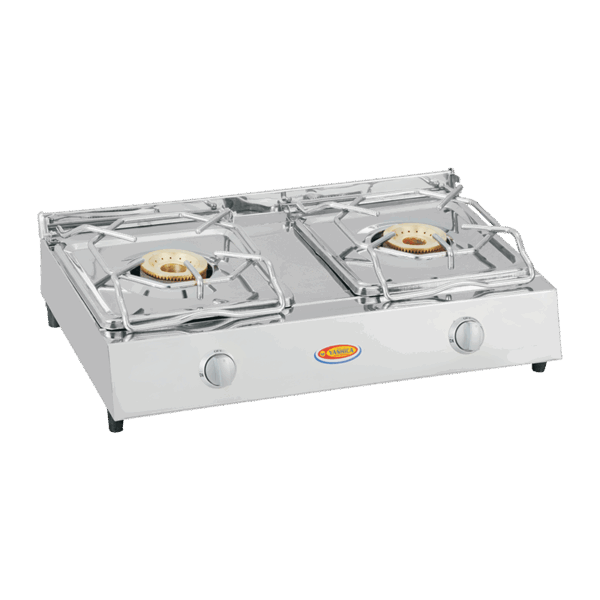
Compare all finishes in the Yashica built-in hob category. For a freestanding metal appliance with an oven, review the CR5300 stainless-steel cooking range, which is listed with stainless-steel top, panel and sides.
Gas safety: If you smell gas, hear an unexplained hiss, see a damaged hose or notice a flame that remains unstable after basic cleaning, turn all burner knobs off, close the gas supply when it is safe to do so, ventilate the area and call a qualified gas technician. Do not operate electrical switches, create a flame or attempt an internal repair in a gas-filled room.
Frequently asked questions
Is tempered glass safe for daily cooking?
It is designed for cooking appliances when correctly installed and used, but it must be protected from hard impacts, thermal shock and oversized unstable cookware.
Does stainless steel scratch?
It can scratch when abrasive pads or sharp tools are used. Use soft cloths and suitable cleaners.
Which surface is easier to clean?
Glass can be faster to wipe, while steel may be more forgiving of heavy handling. Cleaning habits matter more than appearance alone.
Does Yashica list a glass-top hob?
Yes. The YA-486 is listed with 8mm tempered glass.
Are Yashica steel and glass hobs the same burner layout?
The audited models list two large brass burners and one small burner.
Where can I compare finishes in person?
Visit a location from the Yashica store locator after confirming display availability.
Conclusion
Choose glass for a modern appearance and easy flat-surface wiping, provided the household can protect it from impact. Choose steel for a familiar surface that suits intensive handling. In both cases, burner spacing, trivet stability, installation quality and cleaning habits are more important than appearance alone.