






How to Clean a Blender Jar and Remove Food Smells
Blender jars can retain the smell of onion, garlic, green chilli, spices, milk or mango when residue stays around the blade, lid seal or jar base. The safest cleaning method is simple: unplug the motor base, separate removable parts and use mild soap. Do not immerse the motor unit or pour water into electrical openings.
Clean the jar immediately after use
Fresh residue is easier to remove than dried paste. Empty the jar, rinse loose food with normal-temperature water and keep fingers away from sharp blades.
Basic blender jar cleaning method
- Switch off and unplug the appliance.
- Remove the jar from the motor base.
- Take off the lid and any removable cap.
- Rinse loose food.
- Add warm water and a small amount of mild dish soap.
- Clean with a soft sponge or brush.
- Rinse thoroughly.
- Dry the jar upside down with airflow.
Can you self-clean the jar by blending soapy water?
Some blender manuals allow a short low-speed cleaning cycle. Use this method only when the manufacturer permits it. Never fill the jar with hot or boiling water, and never run it without the lid secured.
How to clean around the blade
Food can collect below or around the blade. Use a long-handled soft brush instead of fingers. If the blade assembly is removable, follow the manual exactly and avoid losing seals or washers.
How to remove food smells
First repeat a mild-soap wash
Most smells remain because a thin film is still present. Clean the lid, sealing ring and small cap as well as the jar.
Air-dry completely
Storing a damp closed jar traps odour. Leave the lid off until every part is dry.
Use baking soda only when permitted
A mild baking-soda solution can help some odours, but first check the manual and material guidance. Avoid abrasive scrubbing on clear surfaces.
Avoid mixing cleaning chemicals
Never combine bleach, vinegar, ammonia or other cleaners. Strong chemicals can damage parts and create harmful fumes.
Cleaning glass and unbreakable jars
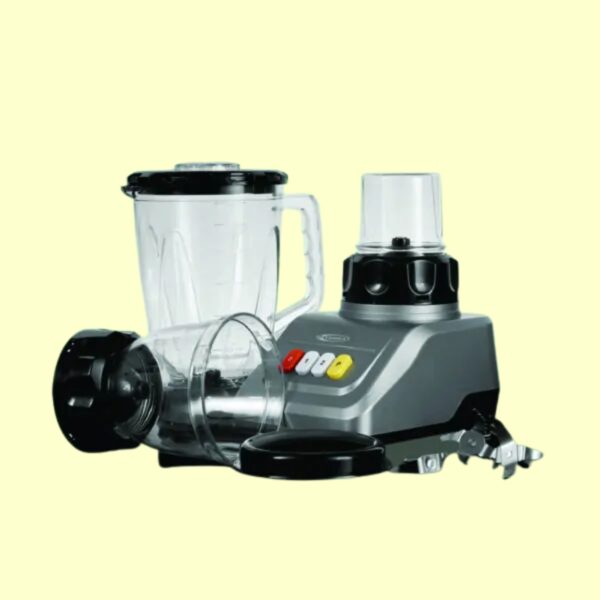
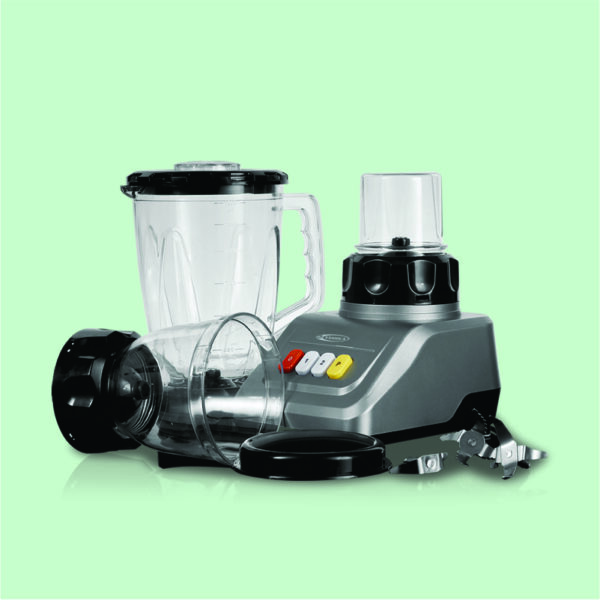
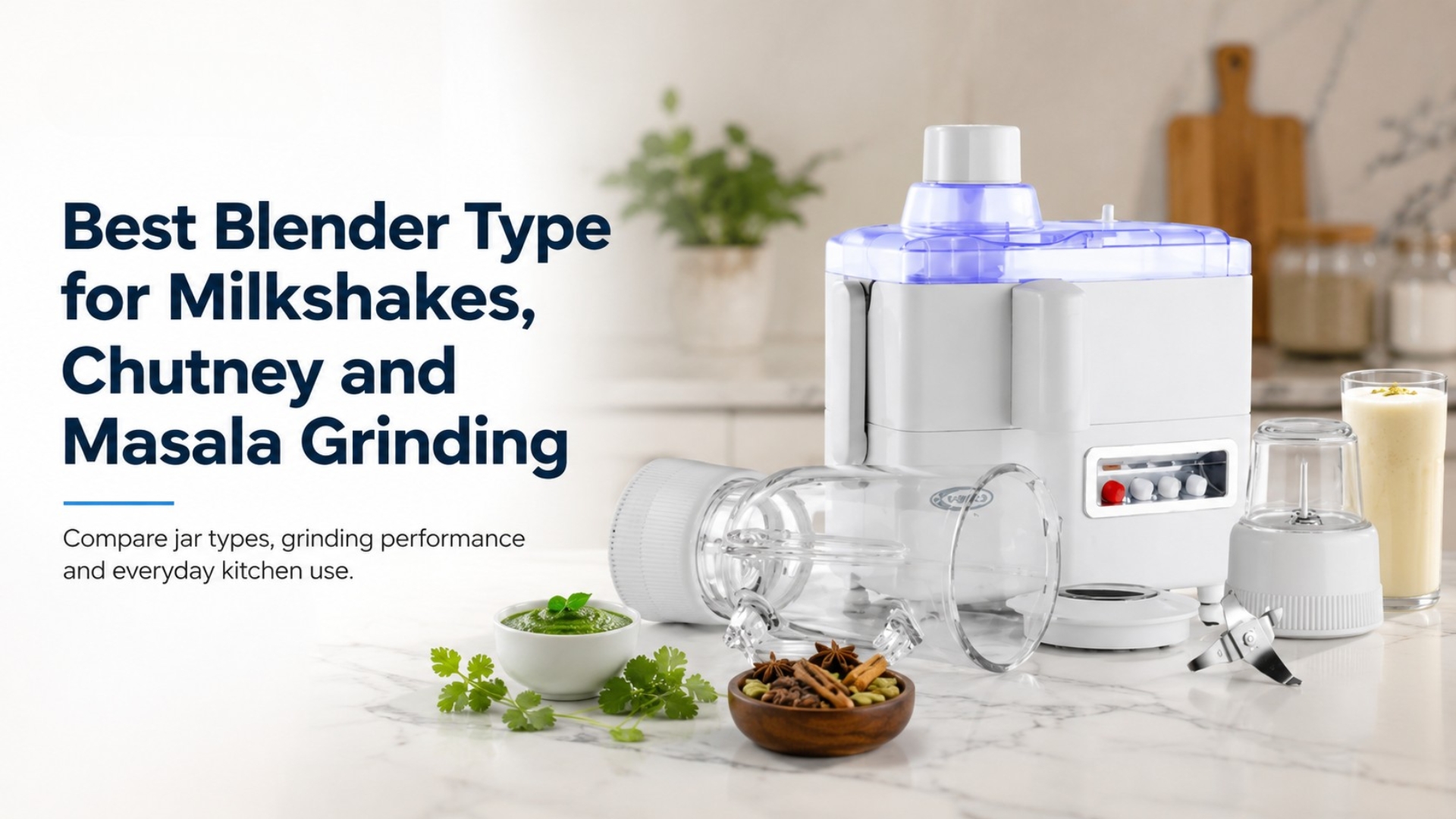
The Yashica YA-223 lists an unbreakable 1.6-litre blender jar and grinder cups. The YA-323 lists clear glass containers. Both should be handled gently. “Unbreakable” does not mean scratch-proof, and glass should not be exposed to sudden temperature changes.
Odour source checklist
| Odour source | Safe action | Avoid |
|---|---|---|
| Lid or rubber seal | Wash separately and dry fully | Storing while wet |
| Blade area | Use a soft brush | Reaching with fingers |
| Dry grinder cup | Wipe and air after spices | Grinding damp spices |
| Motor base | Wipe with a barely damp cloth | Immersion or hose washing |
How to clean a dry grinder cup
After grinding masala, allow dust to settle before opening. Empty the cup, brush out loose powder and wash only if the manual permits. Dry completely before the next dry-grinding session.
Common cleaning mistakes
- Using boiling water in a cool jar
- Immersing the motor base
- Touching blades directly
- Closing and storing a damp jar
- Using steel wool or abrasive powder
- Running a long self-cleaning cycle
- Mixing strong chemicals
For broader appliance-care routines, review Yashica’s home-appliance maintenance checklist. The small-appliance category can help you confirm the exact model before looking for its manual or support information.
Frequently asked questions
How do I remove garlic smell from a blender?
Wash the jar, lid and seal with mild soap, rinse and air-dry fully. Repeat before using stronger methods.
Can I put a blender jar in a dishwasher?
Only when the model manual specifically says the jar and parts are dishwasher-safe.
Can I use boiling water?
No. Sudden heat can damage plastic, seals or glass.
Why does the smell remain after washing?
Residue may remain around the lid seal, blade base or scratches. Clean all removable parts and dry them separately.
Can I wash the motor base?
Do not immerse it. Unplug and wipe the exterior with a barely damp cloth.
Where can I get model-specific instructions?
Contact the Yashica customer support team with the model number.
Conclusion
Clean blender jars promptly with mild soap, use a soft brush around the blade and let every part dry before storage. Persistent smell usually comes from hidden residue or trapped moisture, not a need for harsh chemicals.