





Signs Your Geyser Tank Is Rusting or Starting to Leak
A storage geyser can leak from a pipe joint, safety valve, drain connection or the tank itself. These faults do not have the same seriousness. A loose external fitting may be repairable, while corrosion through the tank body usually means the appliance must be replaced. Early signs should be investigated before water damages walls, ceilings or electrical connections.
Yashica storage-heater pages list imported galvanized iron sheet, powder coating, glass-wool insulation and “rust proof water tank” wording. These are useful construction features, but no metal tank should be assumed to remain immune to corrosion forever under every water quality and installation condition.
Common geyser tank leakage signs
| Sign | Possible source | Urgency |
|---|---|---|
| Rust streaks below the body | Tank seam, fitting or corroded outer area | Switch off and inspect promptly |
| Brown or reddish hot water | Tank corrosion, pipe rust or sediment | Professional diagnosis needed |
| Persistent damp insulation or casing | Internal tank or hidden fitting leak | Stop use and isolate utilities |
| Water from safety valve | Thermal expansion, excess pressure or valve fault | Do not block the outlet; arrange inspection |
| Drips at threaded joints | Loose, damaged or poorly sealed fitting | Turn off supply and repair professionally |
| Paint bubbling or swelling | Moisture beneath coating | Check for corrosion and leakage |
1. Rust-coloured hot water
If only the hot tap releases brown, yellow or reddish water, the water heater or hot-water pipework may be involved. If both hot and cold water are discoloured, the household supply or storage tank may be the source.
Do not assume all discolouration is tank rust. Sediment, old steel pipes and water-supply work can create similar symptoms. A technician may need to flush, inspect fittings or assess internal corrosion.
2. Water beneath the geyser
Dry the area and observe where fresh moisture appears. Condensation can form on cold pipes, while a true leak continues or increases during heating. Water emerging from the lower casing or insulation is more concerning than a visible drip at an external union.
3. Rust around seams, screws or connections
Surface rust around a wet fitting can result from a small long-term leak. Rust trails starting from inside the casing may indicate hidden water movement. Do not sand and repaint before finding the source.
4. Frequent safety-valve discharge
A safety or pressure-relief valve may release water as the tank heats and expands, especially in a closed plumbing system. Continuous flow, forceful discharge or leakage when the heater is cold requires professional inspection.
Never cap, plug or tie the valve shut. Its discharge pipe should lead safely to a visible drainage point according to the installation instructions.
5. Loss of hot-water quantity
A leak can reduce stored volume, but poor heating, sediment or a failed thermostat can create the same symptom. Combine this sign with visible moisture, pressure change or unusual cycling before concluding that the tank is leaking.
6. Hissing, dripping or water movement when taps are closed
Unexplained water sounds can come from a valve, pipe or tank leak. Close the inlet supply and observe whether the sound stops. Do not remove the casing or insulation.
7. Higher gas or electricity use
A leaking tank continually replaces hot water with cold water, which can make the heater run more often. Increased energy use alone is not proof, but it can support other leakage signs.
External fitting leak vs tank leak
| External fitting or valve | Tank or internal leak |
|---|---|
| Source may be clearly visible | Water may appear from the casing or insulation |
| May be repairable by replacing a fitting | Often requires heater replacement |
| Can stop when the inlet is closed | May continue draining stored water |
| Repair should still be completed professionally | Do not weld or patch a pressurised tank without manufacturer approval |
What to do when leakage is suspected
- Keep people away from wet electrical areas.
- Switch off the electric supply at the breaker when it is safe.
- Turn off the gas supply for gas or hybrid models.
- Close the cold-water inlet.
- Do not operate an empty or leaking tank.
- Photograph the leak location for the technician.
- Arrange professional inspection.
Safety note: Storage water heaters combine hot water, pressure and, depending on the model, gas and electricity. Installation, gas conversion, pressure testing, safety-valve work, internal wiring and tank repairs should be handled by qualified professionals following the exact product manual and applicable local requirements.
Yashica construction features to verify
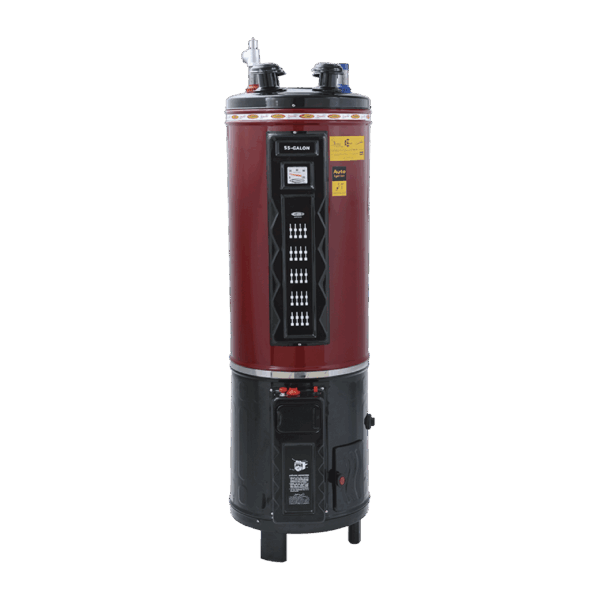
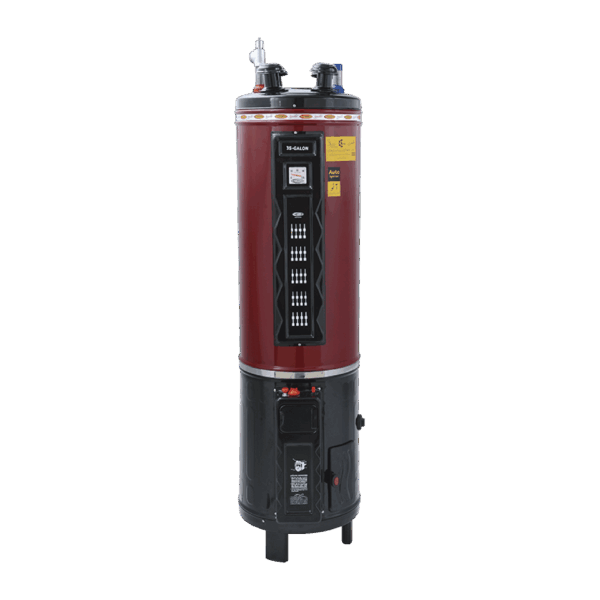
The 25-gallon, 35-gallon and 55-gallon hybrid pages list galvanized iron sheet, rust-proof tank wording, powder coating, insulation and a safety valve. The 55 Gallon Gas Water Heater (REG) lists similar tank and safety features in the regular gas series.
These listings do not publish an anode rod, internal lining type, corrosion warranty or replacement interval. Do not add those claims without official documentation.
Preventing corrosion and leakage
- Use a qualified installation with compatible pipes and fittings.
- Keep the outer casing dry.
- Repair small connection leaks quickly.
- Do not block the safety-valve discharge.
- Have sediment and hard-water scale assessed periodically.
- Do not expose the heater to rain unless the model and installation permit it.
- Follow manufacturer maintenance and inspection guidance.
The Yashica common water-heater problems guide discusses tank and valve leaks broadly, while the gas geyser maintenance guide provides preventive-care context. This article focuses specifically on early rust and leakage diagnosis.
Frequently asked questions
Is water from the safety valve always a tank leak?
No. It can be pressure or thermal-expansion discharge, but frequent or continuous release needs inspection.
Can a rusted geyser tank be repaired?
A leaking pressure tank is generally not a safe DIY repair. Follow the manufacturer or technician’s replacement recommendation.
Why is only hot water brown?
The water heater or hot-water pipework may contain rust or sediment. Professional diagnosis is needed.
Does “rust proof tank” mean it can never corrode?
No product should be assumed immune under every water quality and installation condition.
Can I keep using a geyser with a small drip?
No. A small leak can worsen and create electrical, gas, structural or mould damage.
Where can I request product support?
Use the Yashica contact page and provide the exact model and photos of the leak.
Conclusion
Look for rust streaks, discoloured hot water, damp casing, frequent valve discharge and drips at fittings. Isolate gas, electricity and water when leakage is suspected. External fittings may be serviceable, but water emerging from the tank body or insulation often indicates a serious failure.