






How Much Detergent Should You Use in a Semi-Automatic Washer?
Using too much detergent does not make clothes cleaner. It can create excess foam, leave powder on dark clothes, require extra rinsing and produce an unpleasant smell inside the tub. Too little detergent may leave oil and soil behind. The correct quantity depends on the detergent type, load size, soil level, water hardness and the manufacturer’s instructions.
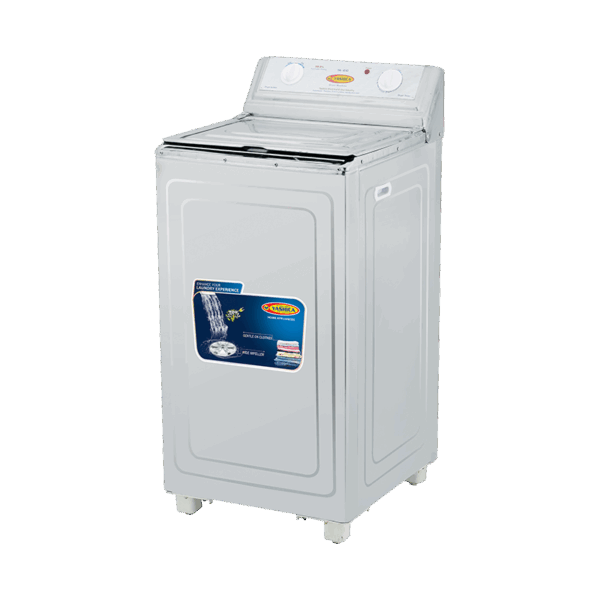
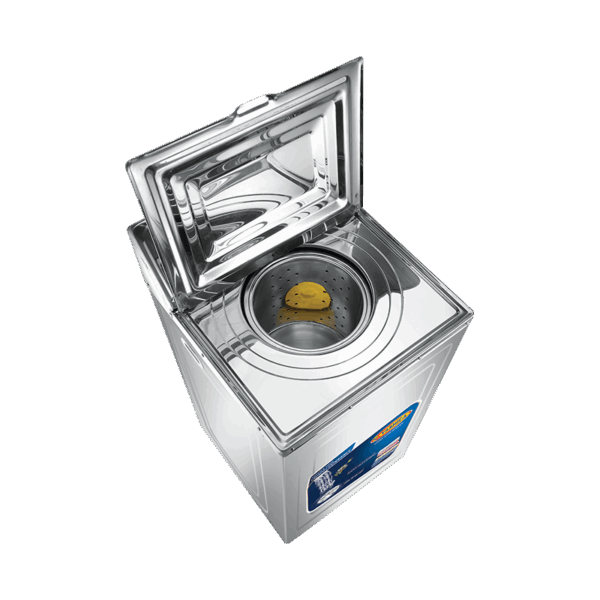
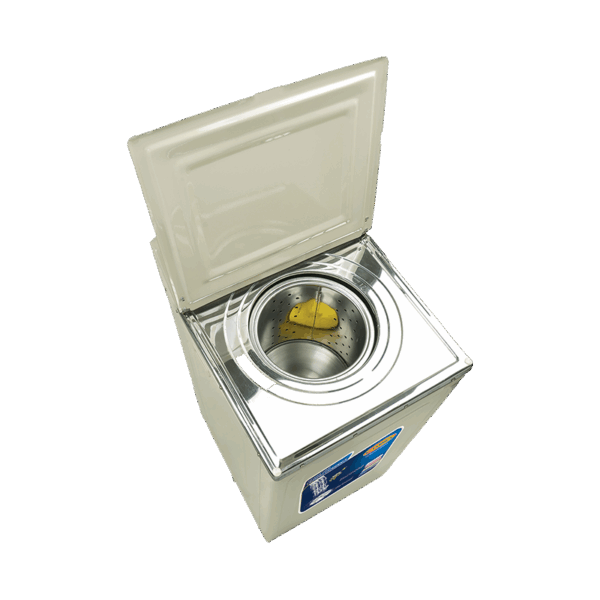
Yashica’s audited washing-machine pages list capacities such as 10kg and 12kg but do not publish detergent scoop quantities. This guide therefore gives a safe method for finding the correct amount without inventing a model-specific dose.
Start with the detergent label
Use the measuring scoop or cap provided by the detergent manufacturer. Powder, liquid and concentrated products are not interchangeable by volume. A “one scoop” instruction means the scoop supplied with that product, not a kitchen spoon or cup.
Factors that change detergent quantity
| Factor | Use less when… | Use more only when the label permits… |
|---|---|---|
| Load size | Small or half load | Full load within rated capacity |
| Soil level | Light daily wear | Work clothes or visible dirt |
| Water hardness | Soft water creates foam easily | Hard-water guidance calls for adjustment |
| Detergent strength | Product is concentrated | Standard formula and large load |
| Pre-treatment | Stains are treated locally | Only if the complete load remains heavily soiled |
Simple dosing method for a semi-automatic washer
- Read the detergent label for the machine type.
- Estimate the dry-clothes load as small, medium or full.
- Start at the lower recommended amount for light soil.
- Dissolve powder where the detergent label or machine manual recommends it.
- Observe foam and rinse water.
- Adjust slightly on the next load rather than adding more mid-cycle.
Do not dose only by washing-machine capacity
A 10kg machine may contain a 4kg daily load. Using a full-capacity dose for every cycle wastes detergent and water. Conversely, a full load of oily kitchen cloths may need more cleaning action than a full load of lightly worn lawn clothes.
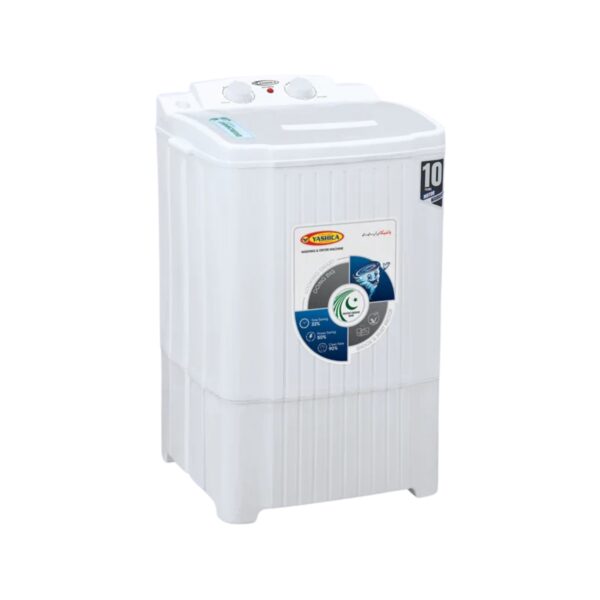
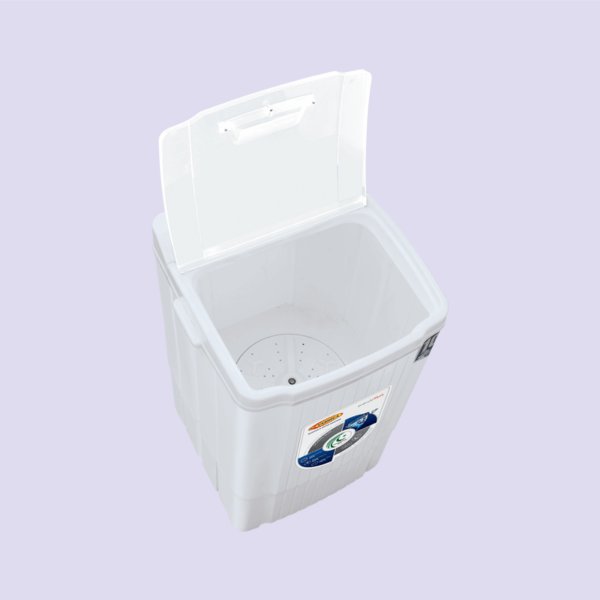
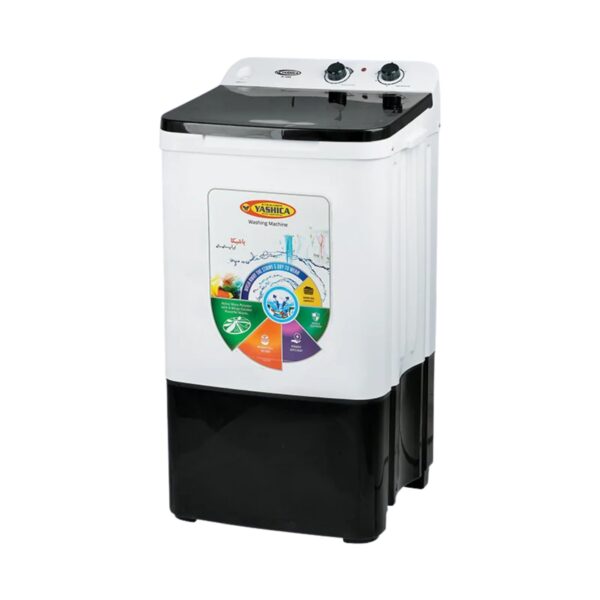
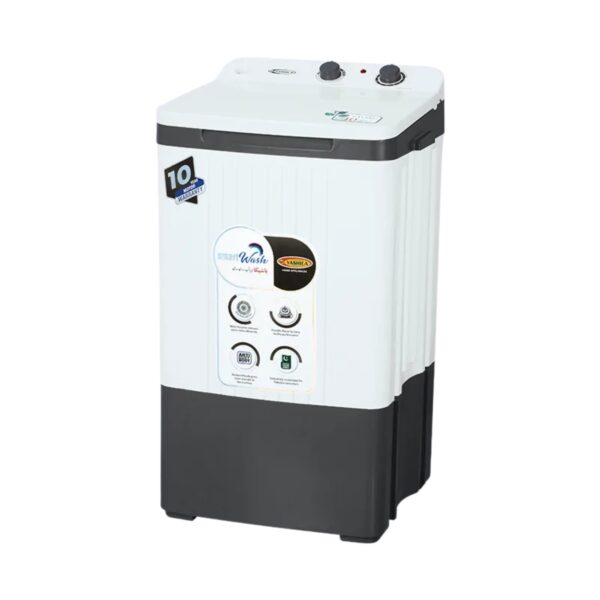
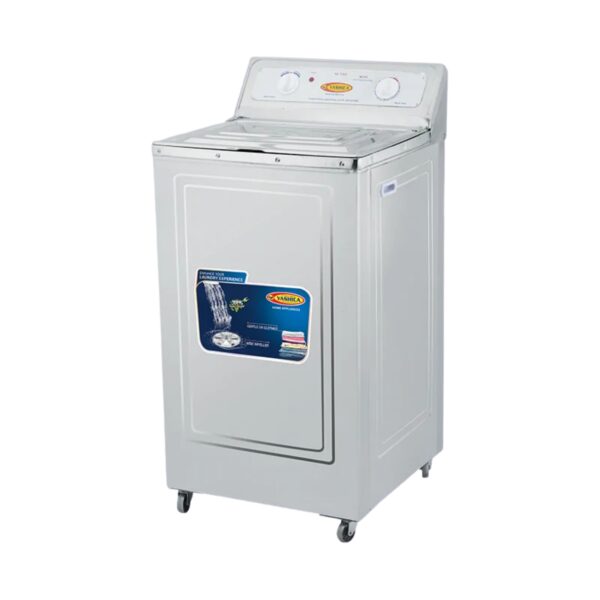
Yashica’s 10kg YA-1000-WM and 12kg YA-630-WM provide useful capacity references, but their official pages do not state detergent amounts.
Signs you are using too much detergent
- Foam remains after rinsing.
- Dark clothes show white residue.
- The tub develops a slippery film.
- Clothes feel stiff or smell strongly of detergent.
- Extra rinse cycles are regularly needed.
- Water overflows because of foam.
Signs you may be using too little
- Oily collars remain dirty.
- Body odour remains after drying.
- Wash water becomes extremely dirty before the cycle finishes.
- Repeated pre-washing is required.
These symptoms can also come from overloading, short wash time or poor water quality. Adjust one factor at a time.
Powder vs liquid detergent
Powder
Powder can be economical and effective for general soil, but it may leave residue when too much is used or when it is not dissolved properly.
Liquid
Liquid dissolves readily and can be used for local pre-treatment when the label permits. Concentrated liquids need careful measuring.
Pakistan-specific laundry examples
Light summer lawn clothes
Use the lower label dose for the actual load. Excess detergent can be difficult to rinse from delicate fabric.
School uniforms
Pre-treat collars, cuffs and food stains. This can reduce the need to increase detergent for the entire tub.
Work clothes
Separate heavily soiled clothing from normal family laundry. Follow the higher-soil dose only within the detergent instructions.
Hard-water areas
Do not keep adding powder because foam appears low. Use a product designed for local water conditions or follow hard-water dosing guidance.
How detergent affects water consumption
Too much foam often leads to extra rinses. Correct dosing can reduce water use and shorten laundry time. The automatic vs semi-automatic washing-machine guide explains why manual water control is important in semi-automatic machines.
Keeping the tub clean
- Do not leave detergent paste on the tub wall.
- Rinse the machine after unusually soapy loads.
- Leave the lid open until the interior dries.
- Wipe the scrub board and rim.
- Do not mix bleach, ammonia or household cleaners.
The budget washer guide discusses the high-capacity semi-automatic segment, while the Yashica washing-machine category provides verified model capacities.
Frequently asked questions
How many scoops should I use for a 10kg washer?
Use the detergent label’s dose for the actual load and soil level. Scoop sizes vary, so there is no universal number.
Should detergent be added before clothes?
Follow the machine and detergent instructions. Dissolving powder before adding delicate dark clothes can reduce residue.
Why is there powder on black clothes?
Too much detergent, poor dissolving, overloading or insufficient rinsing can cause residue.
Does more foam mean better cleaning?
No. Excess foam can reduce mechanical washing action and increase rinsing.
Can hand-wash powder be used in a washing machine?
Use detergent labelled for the appliance type. High-foam hand-wash powder may be unsuitable.
Where can I confirm Yashica washer capacity?
Check the official model page or browse the Yashica washing-machine category.
Conclusion
Measure detergent according to the product label, actual dry load, soil and water hardness. Begin with the lower recommended dose and adjust gradually. Do not use a full-capacity scoop for every load simply because the washer is rated at 10kg or 12kg.